If you’ve ever stood in a factory watching a robotic arm place a tiny medical implant with sub-millimeter precision, or checked your phone’s GPS to find a coffee shop across town, you’ve relied on electromagnetic sensors to make that happen. As someone who runs an Electromagnetic Sensor & Assembly facility, I talk about accuracy every single day—with automotive engineers building driver-assist systems, aerospace teams calibrating satellite navigation modules, and even food and beverage manufacturers inspecting packaging for tiny defects. The question I get most often isn’t “What do these sensors do?” It’s: How accurate are they, really? The answer isn’t a single number, and it’s not one that can be pulled straight from a spec sheet. It depends on so many small, easy-to-overlook factors—things that don’t always show up in marketing materials, but make all the difference when a sensor is actually installed in the real world. Electromagnetic Sensor & Assembly

Let’s start with the basics: what even is “accuracy” for an electromagnetic sensor? Most people mix it up with resolution, so let’s clear that up right away. Resolution is the smallest change a sensor can pick up—like being able to detect a shift of 0.1 millimeters. Accuracy is how close that measurement is to the true value, and that’s where things get messy. A sensor might have a resolution of 0.05 mm, but if it’s calibrated wrong, it could be off by 0.5 mm every time you take a reading. For industries where that half a millimeter is the difference between a safe brake system and a faulty one, that gap is non-negotiable. Over my years in this business, I’ve seen way too many clients come to us with sensors they bought online that looked great on paper, only to find they were wildly inaccurate once they put them to work.
The first big driver of accuracy is the type of electromagnetic sensor we’re talking about. Let’s break down the most common ones we assemble, because each has its own strengths and weaknesses. Inductive sensors, for example, are the workhorses of industrial automation. They work by generating an electromagnetic field, and when a metal object enters that field, the sensor detects the change. In ideal, controlled lab conditions, a high-quality inductive sensor can have an accuracy of ±0.1 mm at a sensing distance of 10 mm. That’s impressive—until you factor in things like the size of the target metal, its material, and the temperature of the environment. If the target is a small, thin piece of aluminum instead of a thick steel plate, that accuracy can drop to ±0.5 mm, no matter how good the sensor itself is.
Then there are capacitive electromagnetic sensors, which work on a similar principle but detect non-metallic objects too—like plastic, glass, or even liquid. These are super useful for level sensing in tanks, for example, but they’re way more sensitive to environmental variables. Humidity, for one thing, plays a huge role here. In a factory where humidity swings from 30% in winter to 80% in summer, a capacitive sensor’s accuracy can drift by as much as 2% of its full range without regular calibration. I learned that lesson the hard way early on in my career, when we delivered a batch of capacitive level sensors to a pharmaceutical plant that kept reporting wrong fill levels during their humid monsoon season. We went back, adjusted their calibration for local humidity ranges, and that fixed the problem— but if we’d talked more about their actual operating environment upfront, we could have prevented that hassle entirely.
For longer-range applications, like tracking the position of a robotic arm across a 2-meter span, we use eddy current sensors. These are more expensive than inductive or capacitive ones, but they deliver better accuracy over distance. In ideal settings, an eddy current sensor can have accuracy of ±0.02 mm at a range of 1 meter. But here’s the catch: magnetic interference is the enemy of all electromagnetic sensors, especially eddy current ones. If there’s a power cable running within a foot of the sensor, or a nearby motor generating its own electromagnetic field, that can throw off the readings by several millimeters. I once worked with an aerospace client who was installing eddy current sensors on a satellite component assembly line. Their facility had a bank of welding equipment that turned on every morning, and every time it did, the sensors’ accuracy dropped enough to cause small defects in the parts. We ended up adding shielding to the sensor assemblies and relocating the sensors away from the welding units, which brought their accuracy back to their specified levels. That’s the kind of on-the-ground problem-solving that doesn’t show up in spec sheets, but is critical to getting consistent performance.
Calibration is another huge factor that people underestimate. A new electromagnetic sensor, right off the assembly line, will have a certain accuracy rating—but that’s only under strict lab conditions where temperature is held constant, there’s no nearby interference, and the target is exactly the material the sensor was designed for. Once you install it in the field, it needs to be recalibrated regularly. How often? It depends on the environment. A sensor in a climate-controlled office might only need calibration once a year, but one in a foundry where temperatures swing hundreds of degrees every hour might need it every week. I’ve had clients try to skip calibration to save time or money, and almost every time, they end up with data that’s useless or parts that need to be scrapped. Last year, a small automotive startup came to us with a batch of inductive sensors they’d installed for their door latch system. They’d skipped calibration, and the sensors were so inaccurate that some doors wouldn’t lock properly at all. We recalibrated them and adjusted their installation to avoid nearby wiring, and that fixed the issue—but it was a avoidable mistake.
Environmental factors go way beyond humidity and temperature, too. Vibration is one that’s often overlooked, especially in heavy machinery applications. A sensor bolted to a truck chassis that’s bouncing down a road will experience constant vibration that can wear down internal components over time, leading to drift in accuracy. Over time, that drift can add up. A sensor that starts out at ±0.1 mm accuracy might drift to ±1 mm after 10,000 hours of use in a high-vibration environment. That’s why we build our sensor assemblies with reinforced housings and vibration-dampening mounts for clients working in harsh conditions. We test every single assembly we ship under simulated vibration, temperature swings, and interference to make sure it will hold up to real-world use, not just lab tests.
Wait, let’s talk about something else: full range vs. accuracy. A lot of spec sheets will say a sensor has accuracy of ±0.5 mm, but that might be over its entire range of, say, 100 mm. That means if you’re measuring something at the far end of that 100 mm range, the error could be half a millimeter, but if you’re measuring something at the near end, it might be twice that. That’s called “non-linearity,” and it’s a common source of frustration for users. A sensor’s linearity is how consistent its accuracy is across its entire range. High-quality sensors will have linearity of less than 0.1% of their full range, which means the error is the same no matter where you are in the range. Cheaper sensors might have linearity of 1% or more, which means the error gets worse the farther you get from the sensor’s midpoint. When we design our assemblies, we prioritize linearity for our clients, especially those working in applications where measurements are taken across the entire range. For example, a robotic welder that moves along a 2-meter beam needs consistent accuracy across the whole beam, not just at the start or end.
So let’s put all this together: what’s the real-world accuracy of an electromagnetic sensor? For a high-quality, properly assembled, calibrated, and installed sensor in ideal conditions, you’re looking at accuracy as tight as ±0.01 mm for short-range, precision applications, and maybe ±0.5 mm for longer-range industrial uses. But in the real world—where humidity swings, vibration, interference, and unplanned environmental changes are common—that accuracy can drop by a factor of 5 or 10, sometimes more. That’s why it’s never enough to just buy a sensor based on its spec sheet. You have to work with someone who understands how those specs translate to your specific application.
Over the years, we’ve learned that the best way to get consistent accuracy is to tailor the sensor assembly to the client’s exact needs, not just pull a standard unit off the shelf. A client making medical implants needs a sensor that’s sealed to withstand sterilization, calibrated for sub-millimeter measurements, and free of any metal parts that could interfere with sensitive imaging equipment. A client making agricultural equipment needs sensors that can handle dust, rain, and extreme temperatures, with enough range to track seed placement across a farm field. We don’t just sell sensors—we assemble them to fit those needs, test them under conditions that mirror what the client will actually face, and provide calibration support to keep them accurate over time.
I’ve talked to so many people who think all electromagnetic sensors are the same, that accuracy is just a number you can find online. But it’s not. It’s the sum of hundreds of small decisions: the quality of the coil in the sensor, the shielding we add to block interference, the calibration software we use to account for temperature drift, even the materials we use for the housing. When you’re assembling a sensor for a life-saving medical device or a safety-critical automotive system, every one of those decisions matters. A 0.1 mm error might not sound like much, but for a pacemaker lead that has to fit perfectly in a human heart, or a brake rotor that has to be aligned exactly to stop a car in time, that error can have big consequences.
If you’re in the market for electromagnetic sensors, don’t just ask “how accurate are these?” Ask “how accurate will they be in my facility, with my equipment, under my operating conditions?” Ask about linearity, calibration intervals, interference testing, and how the assembly is built to handle your specific environmental challenges. That’s the difference between a sensor that works well for a year and one that works well for a decade.
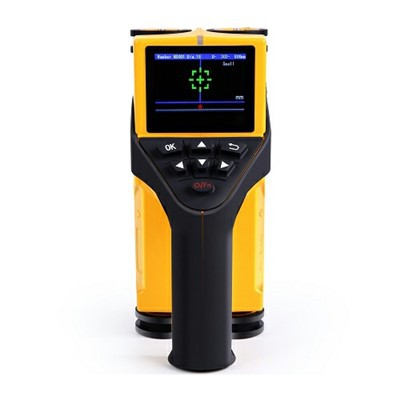
At the end of the day, electromagnetic sensors are the unsung heroes of modern industry and technology. They make self-driving cars safe, medical devices reliable, factories efficient, and so many of the things we take for granted work. Their accuracy isn’t a fixed number—it’s something that’s built, tested, and maintained, every single day, by people who understand how they work inside and out. If you’re working on a project that depends on precise measurements, and you need a sensor that will deliver consistent, reliable accuracy no matter what the environment throws at it, we’re here to work with you. Whether you need a custom assembly for a new aerospace application or replacement sensors for an existing industrial line, we can help you get the accuracy you need. Reach out to us to discuss your requirements and find the right solution for your project.
Turbine Flow Meter References
- Bosch Sensortec. (2022). Electromagnetic Sensor Fundamentals: Accuracy, Resolution, and Environmental Effects. Retrieved from industry application notes
- International Society of Automation (ISA). (2021). Calibration Best Practices for Industrial Electromagnetic Sensors. ISA Press
- Eddy Current Technical Association. (2020). Factors Affecting Eddy Current Sensor Accuracy in Harsh Industrial Environments. Technical Report No. EC-20-007
- National Institute of Standards and Technology (NIST). (2019). Traceability and Accuracy Specifications for Position Sensors. NIST Special Publication 250-87
Dalian Yheng Technology Co., Ltd.
Dalian Yheng Technology Co., Ltd. is one of the leading electromagnetic sensor & assembly manufacturers and suppliers in China, also supports customized service. We warmly welcome you to buy high quality electromagnetic sensor & assembly in stock here from our factory. Contact us for more details.
Address: F1605, NO.10 Huoju road, High-tech Industrial Zone, Dalian, China
E-mail: admin@dlyheng.com
WebSite: https://www.yhengphmeter.com/
