If you’ve ever worked in the machinery parts game, you know a single dented gear, cracked bearing housing, or misaligned precision component can turn a $50 part into a $500 headache—or even shut down a client’s entire production line for days. I’ve seen it happen more times than I’d like to admit: a client gets their shipment, opens the box, and that perfectly machined shaft they ordered is bent beyond use because it got tossed around a truck on the way. As a machinery parts supplier, transport safety isn’t just something I check off a to-do list—it’s the foundation of how I do business. Over 12 years of moving everything from tiny hydraulic valves to 200lb engine crankshafts, I’ve figured out the tricks that actually work, not just the generic “wrap it tight” advice you see everywhere. Let’s break this down like we’re chatting over a coffee (no stuffy manuals, promise). Machinery Parts
First, you’ve got to start with the basics: knowing your part. This is non-negotiable. Not all machinery parts are created equal, and one size definitely doesn’t fit all when it comes to packing for transport. Last year, I had a new sales rep who tried to stuff a stack of thin metal gasket sheets into a generic bubble mailer and sent it to a farm equipment client. When it arrived, the gaskets were creased and torn—turns out, even thin gaskets need rigid support to keep them from bending mid-shipment. I had to replace them at my own cost, and that client didn’t reorder for six months. So here’s my rule before even touching packing materials: pull up the part spec sheet and note three things: weight, fragility, and shape. For example, a cast iron gear that weighs 50lbs is heavy, so it needs a sturdy base, not just bubble wrap. A tiny, precise encoder with delicate circuit boards is super fragile, so it needs extra cushioning. A long, awkward part like a drive shaft can’t be laid flat or crammed into a corner—it needs to be supported along its entire length, or it’ll bend like a cheap straw.
Next up: choosing the right packaging materials, and no, you don’t need to drop $100 on custom foam for every part. I mix and match based on the part, and I’ve got my go-to stash that I grab for 90% of shipments. For rigid, medium-weight parts (think: pulleys, small gear housings), I start with corrugated inserts that are custom-cut to fit the exact shape of the part. Ditch the generic bubble wrap that’s thin and slips—get the thick, 3/16” expanded polypropylene (EPP) foam sheets. They’re lightweight, have give, and don’t compress as easily as regular bubble wrap. I cut them to line the bottom and sides of the box first, so the part doesn’t sit directly on the corrugated. For sharp edges (and let’s be real, most machinery parts have sharp edges), I wrap those with kraft paper first, not foam. Foam can snag on sharp edges and tear, turning it into useless padding. Kraft paper is cheap, thick, and wraps tight without tearing, so that’s my go-to for edge protection.
For super fragile parts—like hydraulic valves with tiny moving parts, or precision bearings that need zero contamination— I use a trick I learned from a old machinist buddy of mine: vacuum-seal the part in a poly bag first. Wait, don’t laugh—this isn’t just for keeping food fresh. Vacuum-sealing removes all the air, so there’s no room for the part to shift around inside the bag, and it also keeps out dust, moisture, and even tiny particles that can scratch precision surfaces. I add a small desiccant packet (the little silica gel things you get in shoe boxes, but I buy bulk 100-packs online for cheap) inside the sealed bag to absorb any extra moisture. Then I wrap that whole thing in two layers of bubble wrap, not just one. And I mark that package with big red “FRAGILE: DO NOT DROP” stickers—way bigger than the ones the shipping company gives you, because the big ones actually get noticed by drivers who load 10,000 packages a day.
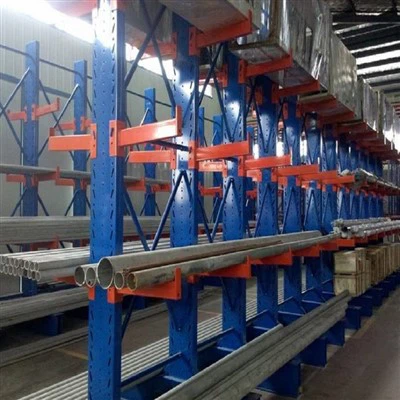
Now, the tricky stuff: long, awkward, or oversized parts. I’m talking drive shafts, turbine blades, heavy castings that are too big for a regular box. For these, I don’t even use standard shipping boxes— I order custom-cut wooden crates from a local woodworker (it’s way cheaper than you think, especially for parts over 6ft long). The key here is support along the entire length of the part, not just at the ends. If you lay a 8ft drive shaft across a crate and only support it at the two ends, gravity will make it sag in the middle, and it’ll bend before it even leaves the warehouse. So I add wooden crossbars inside the crate, spaced every 2ft, cut with notches to cradle the drive shaft so it doesn’t move side to side or up and down. For extra heavy parts (like a 150lb engine block), I add forklift slots cut into the bottom of the crate, so the shipping company can move it with a forklift instead of tossing it with a pallet jack—big win for avoiding dropped crates. I also wrap these oversized parts in a heavy-duty stretch film, not shrink wrap. Shrink wrap can get too tight and damage painted surfaces or precision parts, but stretch film gives a little, so it holds the part in place without putting pressure on it.
Once the part is packed, how do you actually fill the box so nothing shifts? This is where most people mess up. They throw in a bunch of packing peanuts and call it a day, but packing peanuts can shift in transit, leaving gaps where the part can rattle. I use a mix of two things: for small parts, I use loose-fill polyurethane foam peanuts (they’re way less messy than regular styrofoam) and add extra foam only in the empty corners, so the part is wedged snug but not so tight that the box bulges. If the box bulges at all, that’s a red flag—it means the part is loose, and it’ll move during shipping. For medium to heavy parts, I use crumpled kraft paper as filler instead of peanuts. It’s cheaper, it’s recyclable, and it fills gaps way better. I press the filler in around the part so there’s zero play—if you can wiggle the part inside the box, add more filler. That simple step alone cuts damage by like 70%, I swear.
Then there’s labeling and documentation, which is way more important than it sounds. I’ve had a shipment get sent to the wrong city once because the label was smudged, and that cost me a client a week of downtime. So I print two labels: one on the outside of the crate or box, and one tucked inside a waterproof plastic sleeve taped to the inside of the top flap, just in case the outer label falls off. For parts that are sensitive to temperature (like rubber seals that can crack if it’s too cold, or lubricants that can leak), I add a separate “KEEP TEMPERATURE 40-80°F” label, and I even include a small temperature indicator sticker inside the package. That way, if the shipment sits on a tarmac in 90°F weather for two days, I can prove it was exposed to bad temps before it got to the client, which avoids any disputes. Also, for high-value parts, I always require signature confirmation when they’re delivered. No exceptions. I’ve had too many drivers leave packages on porches where they get stolen or rained on, and signature confirmation takes 2 minutes extra at drop-off and saves me from losing a $1,000 part.
Wait, and what about shipping carriers? Not all carriers are equal for machinery parts. I used to use the big national carriers for every shipment, but I found out that for heavy parts over 50lbs, the regional freight carriers are way cheaper and way more careful. They specialize in moving heavy, irregular stuff, and their drivers actually know how to handle crates and don’t toss them like they’re a soda can. For small parts under 10lbs, the big carriers work fine, but I always compare rates between USPS, UPS, and FedEx because sometimes USPS is cheaper for small, lightweight parts, especially if they’re going to a rural area. I also never use a “free shipping” option unless it’s for a very small part, because free shipping usually means the carrier is prioritizing speed over handling—you don’t want your precision bearing being put on a plane’s baggage hold with thousands of other bags.
Oh, and one last thing I learned the hard way: always do a pre-shipment check. 10 minutes before you seal the box, pick it up and shake it. If you hear anything rattling or feel the part moving, open it back up and add more filler. I once skipped this step for a shipment of 10 tiny hydraulic valves, and they were all loose inside the box, rattling so much that the seals got damaged during shipping. I had to replace all 10 for free, which cost me $200 and a client who mentioned it to two other shops. Now I do the shake test every single time, no matter how small the part is.

At the end of the day, transporting machinery parts safely isn’t about fancy equipment or breaking the bank—it’s about paying attention to the details that most people skip. It’s cutting the right foam, not overfilling the box, testing for movement, and choosing the right carrier for the job. As a supplier, my job isn’t just to sell you a gear or a valve—it’s to make sure it shows up exactly how you expect it to, ready to install, no dents, no cracks, no delays. If you’ve got a big shipment coming up, or you’re tired of dealing with damaged parts from previous suppliers, hit me up to talk through your needs. I’m always down to chat about the best way to get your parts where they need to be, safe and sound.
Deep Drawn Parts Reference list:
- Machinery Movers Association. (2022). Best Practices for Packaging Heavy Industrial Components. MMA Technical Bulletin 412.
- Federal Motor Carrier Safety Administration. (2021). Guidelines for Securing Oversized and Irregular Freight. FMCSA Freight Safety Advisory.
- International Organization for Standardization. (2019). Packaging for Transport of Precision Engineering Parts. ISO 16526:2019.
- National Ship Protection Council. (2020). Fragile Product Handling Protocols for Commercial Shipping. NSPC Best Practice Report.
Hangzhou Zhalihui Import And Export Co., Ltd.
We are one of the most experienced machinery parts manufacturers and suppliers in China, specialized in providing high quality customized products. Please feel free to buy discount machinery parts in stock here from our factory. Contact us for quotation.
Address: Room 2801, Building 2, Taifu Plaza, No.17, Tonghui Middle Road, Chengxiang Street, Xiaoshan, Hangzhou, Zhejiang
E-mail: Chars_1979@hotmail.com
WebSite: https://www.zhalihui.com/
