If you’ve ever stood on a production floor watching automotive body panels snap into place or aerospace component assemblies click together with precise, vibration-free force, you’ve probably seen multi-spindle riveting equipment at work. As a riveting equipment supplier with more than 15 years in this space, I get asked all the time: what makes these machines different from the single-spindle or manual riveters that some small shops still rely on? The answer boils down to features that aren’t just “nice to have”—they’re the backbone of high-volume, high-precision manufacturing that keeps parts consistent, cuts down on downtime, and keeps production lines moving. Let’s break down the key features that set quality multi-spindle riveting gear apart, and why they matter for your operation. Riveting Equipment

First and foremost, the most defining feature is multi-axis synchronized riveting actuation. Unlike old-school machines that run each spindle individually, our multi-spindle systems are linked to a central motion control platform that coordinates every rivet stroke in real time. That means if you’re riveting a truck frame that has 12 rivets spaced along a 60-inch beam, the machine won’t just punch each rivet in sequence—it’ll match the force, speed, and depth of every single stroke within a 0.01mm tolerance. I saw a clear example of this a couple years back when we installed a system for a heavy equipment customer who was struggling with misaligned rivets on their bulldozer boom arms. Before, they were using a 4-spindle unit that wasn’t synced; by the time the fourth rivet went in, the first two had shifted slightly due to frame flex, leading to 8% of parts being rejected at final inspection. Swapping to our synchronized system cut their defect rate to under 0.5% within the first month. That sync doesn’t just prevent alignment issues—it also reduces cycle time by 30 to 50% compared to running individual single-spindle stations, because you’re doing more work in the same window of time.
Next, modular spindle configuration and adaptability. One mistake a lot of manufacturers make is buying a one-size-fits-all multi-spindle machine and forcing it to work for every part on their line. Quality systems, though, let you adjust spindle count, spacing, and even spindle type for different jobs. For example, a medical device customer might need 8 small, high-precision rivets for a surgical instrument handle, while an appliance maker might need 16 heavier-duty rivets for a dishwasher door. Our modular units let you reconfigure spindle spacing in as little as 20 minutes, no custom tooling or long lead times required. We also offer different spindle types: pneumatic riveting for soft metals like aluminum or copper, hydraulic for thicker steel or high-strength alloys, and even servo-driven spindles for jobs that need ultra-precise control over rivet force—like aerospace components where even a 10-pound difference in force can compromise part integrity. This adaptability is key because most factories don’t run just one product; being able to switch between jobs without buying a whole new machine saves tens of thousands of dollars in capital costs over the life of the equipment.
Speaking of force and precision, closed-loop force and displacement monitoring is another non-negotiable feature of modern multi-spindle riveting systems. Manual riveting or old open-loop machines only tell you that a rivet went in—they don’t tell you if you applied too much force (which can crack the part or deform the rivet) or too little (which leaves a weak joint that could fail down the line). Our systems have sensors built into every spindle that track force and displacement 1,000 times per second, and log every rivet’s data to a central database. That means operators can pull up a report and see exactly how every rivet on a batch of 1,000 automotive door panels was set—no guesswork. For our aerospace customers, this data isn’t just a quality control measure; it’s a requirement from FAA regulations, which mandate traceability for every fastener in a critical component. I remember a defense contractor client who was audited a few months after installing our system, and they passed with flying colors because they had 100% traceable rivet data for every part, whereas before they’d been relying on paper logs that were incomplete and error-prone.
Durability and low maintenance design are features that don’t get talked about as much, but they’re what make multi-spindle equipment worth the investment. Production lines run 24/7, 365 days a year for many automotive, heavy equipment, and aerospace shops. So a machine that has to be shut down for maintenance every two weeks is a lot less valuable than one that can run for 1,000 operating hours before needing a routine service. Quality multi-spindle riveting systems use heavy-duty cast iron frames, not welded steel, which absorbs vibration better and doesn’t warp over time. The spindles are sealed to keep out metal shavings, lubricant, and dust—common contaminants on production floors—and use self-lubricating bearings that reduce the need for weekly grease checks. We also design our machines with accessible components: if a spindle does need replacing, an operator can swap it out in 45 minutes, not 4 hours, which cuts downtime. A customer in the agricultural equipment space told us that since switching to our system, their riveting line downtime dropped by 60 hours a year, which translated to an extra 2,400 units produced annually—enough to justify the machine’s cost in less than 18 months.
Safety integration is another key feature that’s evolved a lot in multi-spindle equipment over the last decade. Old riveting machines had large, exposed moving parts that posed a risk of crush injuries, especially when operators needed to load or unload parts. Modern systems use light curtains, interlocked guarding, and even vision systems that stop the machine instantly if a foreign object or hand is in the riveting zone. We also integrate with a factory’s existing line safety systems, so the multi-spindle unit will pause if the whole line needs to stop for a material jam or quality check. This not only keeps operators safe—it also reduces unplanned downtime from accidents. I worked with a metal stamping customer who had a near-miss injury on their old 10-spindle machine, and after installing our safety-integrated system, their OSHA recordable incident rate for the riveting line dropped to zero. That’s a big win for both operator well-being and avoiding costly safety fines.
One more feature that’s become a must-have for smart manufacturing is connectivity with Industry 4.0 platforms. Today’s factories don’t work in silos—they share data between lines, inventory systems, and ERP software to plan production, track parts, and predict maintenance. Our multi-spindle riveting systems have open communication protocols (like OPC UA, Modbus TCP) that let them send rivet data, cycle times, and equipment performance data to your central system. For example, if a spindle is showing slightly higher vibration that’s a sign it’s going to fail soon, the system can send an alert to the maintenance team before it breaks down, instead of waiting for it to stop mid-production. A customer in the consumer electronics space used this connectivity to plan their maintenance schedule around their production runs, so they never had to shut down during a big order—something that saved them over $100,000 in rush order penalties last year.
Of course, no feature matters if the machine isn’t designed for easy setup and operation. We’ve all seen complex manufacturing equipment that takes a 2-week training course just to change a part’s riveting program. Our multi-spindle systems come with user-friendly HMI (human-machine interface) screens that let operators input a new part’s dimensions, select the rivet type, and adjust settings in minutes, no coding required. The HMI also shows real-time cycle times, defect rates, and alerts, so operators don’t have to cross-reference multiple screens to keep the line running. We even offer on-site training for all our customers, so their team is comfortable using the machine from day one—something that’s a huge help for small to mid-sized manufacturers that don’t have a dedicated automation engineering team on staff.
At the end of the day, multi-spindle riveting equipment is an investment in consistency, speed, and quality that single-spindle or manual systems just can’t match. The features I’ve talked about—synchronized actuation, modular adaptability, closed-loop monitoring, durable design, safety integration, Industry 4.0 connectivity, and user-friendly operation—aren’t just buzzwords. They’re the reasons why our customers cut defect rates, reduce downtime, and scale their production without having to hire more workers or add more lines.
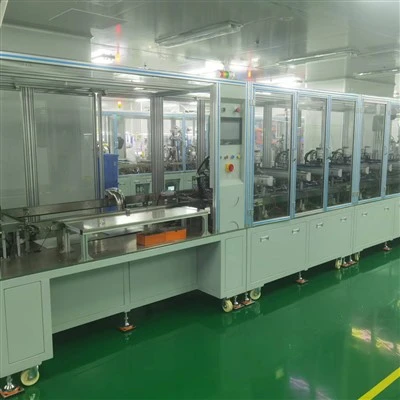
If you’re tired of dealing with inconsistent rivet quality, slow cycle times, and unexpected downtime on your riveting line, let’s connect to talk through your specific needs. We can walk you through how our multi-spindle systems work, help you figure out the right configuration for your parts, and share case studies from manufacturers just like yours who’ve seen real results from upgrading their riveting equipment.
Slide Table and Linear Module References
ISO 10816-3: Mechanical Vibration – Evaluation of Machine Vibration by Measurements on Non-Rotating Parts, Part 3: Industrial Machines with Rated Power Above 15 kW and Rated Speed Between 120 r/min and 15,000 r/min
AS9100D: Aviation, Space, and Defense Organizations – Quality Management Systems Requirements for Aerospace Products
OSHA 29 CFR 1910.217: Mechanical Power Presses – General Requirements
Yangning (Xiamen) Intelligent Technology Co., Ltd.
With abundant experience, we are one of the most professional riveting equipment manufacturers in China. As we have world-leading production equipment and strong manufacturing capabilities, we warmly welcome you to buy bulk advanced riveting equipment from our factory. Customized orders are welcome.
Address: Room 307-2, No. 15 Duiying Road, Software Park Phase III, Torch Hi-Tech Zone, Xiamen, Fujian, China
E-mail: mia@ynautos.com
WebSite: https://www.ynautos.com/
