If you’ve ever walked past a construction site or stood in a home with a heating or cooling system that hums in the background, you’ve probably glanced at air ducts—large, metal pipes snaking through attics, basements, or wall cavities. As an insulated air duct supplier who’s spent the last decade helping contractors and homeowners sort through every detail of HVAC design, one question pops up more often than any other, and it’s a confusing one: Do insulated air ducts even need to be covered after installation? It’s not a trivial question—skip this step, and you could end up with higher energy bills, poor indoor air quality, or even structural damage down the line. Let’s break this down with real-world experience, science, and the lessons I’ve learned from thousands of installations to clear up the noise. Insulated Air Duct
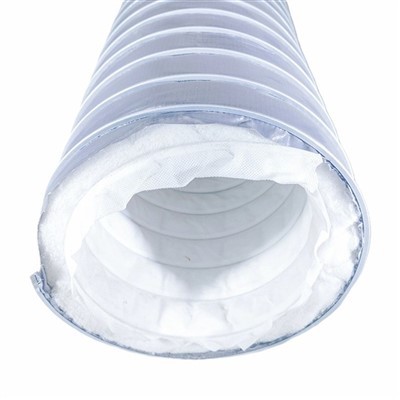
First, let’s start with why air ducts get insulated in the first place. Insulation’s core job for ducts is simple: reduce heat transfer between the air inside the duct and the space around it. Think about a supply duct in a hot attic during summer: the cold air moving through that duct will warm up before it reaches your living room, forcing your air conditioner to work harder to cool it back down. In winter, a supply duct in an unheated basement will lose heat before it gets to your bedrooms, wasting energy and leaving those rooms feeling chilly. Without insulation, that energy loss can add up to 20-30% of an HVAC system’s total energy use, according to the U.S. Department of Energy. That’s not just a random number—we’ve seen it play out on job sites: a homeowner in Minneapolis we worked with a few years ago had uninsulated ducts running through an unconditioned crawl space; their heating bill was $420 a month in January, and after we installed insulated ducts and added proper covering, it dropped to $315. The difference was night and day.
But insulation alone is never enough. That’s where covering comes in, and the purpose of that cover goes way beyond just “looking neat.” Let’s start with the most practical reason: protecting the insulation from physical damage and moisture. Most standard duct insulation is flexible fiberglass or closed-cell foam—soft materials that can tear easily if a worker bumps it with a tool, or if debris falls from an attic ceiling. Tear a hole in the insulation, and you’ve created a direct path for heat transfer, negating 10-15% of your insulation’s value right there. The bigger risk, though, is moisture. Fiberglass insulation, in particular, absorbs water like a sponge, even small amounts from humid air seeping through gaps, or condensation that forms if the insulated duct’s temperature drops below the dew point of the surrounding space. Once insulation gets wet, it loses all its R-value—the measure of insulation’s thermal effectiveness—until it dries out completely, and even then, repeated moisture exposure can cause mold growth. Mold in your duct isn’t just unsightly; it circulates through your home, triggering allergies, asthma, and respiratory issues. A cover, usually made of a thin, durable polyethylene jacket or metal foil, acts as a moisture barrier, preventing water from getting into the insulation. We once worked with a contractor in Florida who skipped covering insulated ducts in a hot, humid attic; within 18 months, the insulation was 30% saturated with condensation, and the homeowner had to replace the entire duct system at a cost of $8,000. A $200 cover would have prevented that.
Another critical, often overlooked, reason for covering insulated ducts is meeting building code requirements. Every state in the U.S., and most countries globally, have strict codes for HVAC system components, including duct insulation and their covers. For example, International Residential Code (IRC) section M1601.2 requires that duct insulation installed in unconditioned spaces (attics, crawl spaces, garages) be covered to protect it from physical damage and moisture. Skip that cover, and you’ll fail a building inspection—meaning you’ll have to redo the work at extra cost, delaying your project. Beyond basic codes, many energy efficiency standards (like Energy Star) require covered insulated ducts to qualify for their efficiency certifications. For contractors, this means the difference between a project that passes and one that gets sent back, and for homeowners, it means the difference between a system that meets modern efficiency standards and one that wastes energy. We’ve had dozens of contractors come to us after a failed inspection, saying they installed the best insulation but missed the cover step, and needed to purchase the right covers to get their project approved. It’s a common, avoidable mistake.
But wait—what if my duct is in a finished wall or a conditioned space? Does that change things? Let’s address that, because I’ve had this question a lot too. If a duct is inside a drywall cavity in a finished room, surrounded by conditioned air (meaning the space is heated and cooled to the same temperature as the air in the duct), heat transfer is minimal. But even there, a cover can still be useful. Drywall can damage insulation as it’s installed, and in some cases, small gaps between the insulation and the duct can let moisture seep in, even in conditioned spaces. That said, covers are more critical in unconditioned spaces, but even in finished areas, a tight-fitting cover prevents insulation fibers from blowing into your home through small gaps. Flexible fiberglass insulation can shed tiny fibers that, if inhaled, can irritate respiratory systems. The cover acts as a barrier to keep those fibers trapped inside the insulation, making your air cleaner. That’s a benefit I don’t think enough people talk about—for homeowners, that’s better indoor air quality, and for families with kids or allergy sufferers, that’s a big deal.
Now, let’s talk about the times when skipping a cover might seem like a good idea, and why that’s almost never worth it. Some people think metal ducts don’t need covers because they’re durable. Wait—no, the insulation on metal ducts still needs protection. The metal duct is the pipe, the insulation is the material wrapped around it to reduce heat transfer. Even metal ducts with insulation need a cover to protect that insulation. Another common myth: closed-cell foam insulation doesn’t need a moisture barrier because it’s water-resistant. Closed-cell foam is indeed more moisture-resistant than fiberglass, but it’s not indestructible. It can tear from sharp edges on metal ducts, or from heavy items stored in an attic. A cover adds that extra layer of protection, so even if the foam is torn, the barrier is still there. We had a customer who installed closed-cell foam insulation without a cover in a storage attic full of boxes; within a year, a box of tools fell and tore a 2-foot section of insulation, and without a cover, condensation built up in the gap, leading to mold. A cover would have prevented that.
Let’s also touch on energy efficiency, which is the backbone of why we do this work. Every time you skip a cover, you’re losing efficiency, which means higher utility bills. Let’s do a quick math example: a 1,500 square foot home with a 3-ton HVAC system. If your ducts run through an unconditioned attic, you’re looking at a 25% energy loss from uninsulated ducts. With insulated ducts but no cover, you lose an additional 10-15% because of damaged or wet insulation and gaps. That adds up to $300-$500 a year in wasted energy costs, according to Energy Star. For a homeowner, that’s $3,000 over 10 years—enough to pay for the cover several times over. For small business owners, that number is even higher: a retail space with a larger HVAC system could lose $1,000 or more a year from uncovered insulated ducts. It’s a small upfront cost that saves big in the long run.
I also want to share a lesson I learned early in my career, when I was just a new salesperson working with our insulation products. We had a contractor who installed insulated ducts without covers in a 10-unit apartment building. Six months later, three tenants complained about high energy bills and stuffy air. When we inspected the ducts, we found that the insulation had pulled away from the ducts in several spots, because without a cover to hold it tight, the flexible insulation had shifted as air moved through the ducts. That created gaps where unconditioned air seeped in, and the insulation that was still in place was saturated with condensation from the shifting. We had to re-insulate all the ducts and add covers, which cost the contractor twice as much as adding covers during initial installation. That’s a mistake no one wants to make—adding a cover at installation is a 5-minute step that avoids hours of rework later.
Now, let’s make sure we’re clear on what a “proper cover” is, because not all covers are created equal. For flexible fiberglass insulation, the standard cover is a polyethylene jacket, fitted tightly around the insulation with adhesive or metal staples to prevent gaps. For closed-cell foam insulation, a durable foil cover is best, as it reflects radiant heat and adds another layer of moisture protection. For metal ducts wrapped with insulation, a metal or heavy-duty plastic cover is ideal, as it resists physical damage. The key is that the cover is continuous, with no gaps—even a ¼ inch gap can let 50% of the moisture or heat transfer through that would be blocked by a tight cover. That’s why it’s not just about using any cover; it’s about using the right cover for your insulation type and making sure it’s installed correctly.
I know what some of you are thinking: “This all sounds great, but I’m on a tight budget. Can’t I skip the cover to save money?” Let’s be honest—yes, you can, but you’ll pay for it later. The average cost of a cover for a 10-foot duct is $15-$20, which is nothing compared to the $1,000-$3,000 in repairs or energy waste you’ll face in a few years. We’ve worked with dozens of homeowners who tried to save a few dollars upfront, only to end up spending more on fixes. It’s a classic case of “penny wise, pound foolish.” If your budget is tight, prioritize covers as a non-negotiable step, not an afterthought.
At the end of the day, insulated air ducts are a big investment in your home’s comfort and efficiency. The cover isn’t a decorative afterthought—it’s a critical part of the system that protects your investment, meets codes, saves energy, and improves indoor air quality. It’s the barrier between your hard-earned money and wasted energy, and between your family’s health and potential mold or allergens.

If you’re a contractor looking to get the right covers for your next project, or a homeowner who wants to upgrade your duct system to lower your bills, we’re here to help. We provide high-quality, durable covers that fit every type of insulated duct, and we can offer guidance on the right products for your specific space—whether it’s an attic, crawl space, or finished wall. Reach out to us to discuss your needs and find the perfect solution for your HVAC system.
PVC Steel Wire Hose References
- U.S. Department of Energy, “Energy Efficiency and Renewable Energy: Heating and Cooling Homes,” 2023.
- International Residential Code (IRC), Section M1601.2, “Duct Insulation and Protection,” 2021 Edition.
- Energy Star, “Duct Sealing and Insulation for Home Efficiency,” 2022.
- National Air Duct Cleaners Association (NADCA), “Mold Prevention in HVAC Systems,” 2021.
- U.S. Department of Energy, “Energy Savings Calculator for Residential HVAC Systems,” 2023.
Dongyang Hstube Co., Ltd.
As one of the leading insulated air duct manufacturers and suppliers in China, we warmly welcome you to wholesale cheap insulated air duct for sale here from our factory. If you have any enquiry about free sample, please feel free to email us. Quality products and reasonable price are available.
Address: NO.5 CHENGDONG ECOLOGICAL INDUSTRIAL ZONE, DONGYANG, ZHEJIANG, CHINA.
E-mail: sales@hstube.com
WebSite: https://www.ductword.com/
