Hey there! As a supplier of polyurethane screen panels, I often get asked about the tear strength of these panels. So, let’s dive right in and talk about what tear strength really means for our polyurethane screen panels. Polyurethane Screen Panel
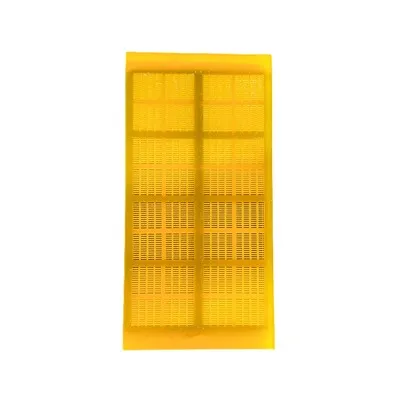
First off, what exactly is tear strength? Tear strength is a measure of how much force is needed to tear a material. In the case of polyurethane screen panels, it’s a crucial property. You see, these panels are used in a whole bunch of industries, like mining, quarrying, and recycling. In these tough environments, the screen panels are constantly exposed to all sorts of rough treatment. Rocks, gravel, and other heavy materials are constantly rubbing against them, and there’s a lot of impact involved too. If the panel doesn’t have good tear strength, it’s going to tear easily, and that’s going to lead to a whole bunch of problems.
When a screen panel tears, it can’t do its job properly. The material that’s supposed to be screened starts to pass through the tears, which means you’re not getting an accurate separation. And that can mess up the whole production process. It can also lead to more wear and tear on other parts of the equipment, because the incorrect size of materials might be flowing through the system. Plus, replacing a torn screen panel is a hassle. It costs time and money, and it can cause downtime in your operation.
So, how do we measure the tear strength of our polyurethane screen panels? Well, there are different testing methods out there. One common method is the trouser tear test. In this test, a sample of the polyurethane screen panel is cut into a trouser shape. Then, the two “legs” of the trouser are pulled apart at a constant speed. The force required to keep the tear progressing is measured. The higher the force, the better the tear strength of the panel.
Another method is the Graves tear test. In this test, a specifically shaped sample is used, and a tear is initiated at one end. The sample is then pulled in a certain way, and the force needed to continue the tear is recorded. Both of these tests give us a good idea of how well our polyurethane screen panels will hold up under real – world conditions.
Now, what factors affect the tear strength of our polyurethane screen panels? The type of polyurethane we use is a big one. There are different formulations of polyurethane, and some are just naturally stronger than others. We use high – quality polyurethanes that are formulated to have excellent tear resistance. The manufacturing process also plays a role. We make sure that the polyurethane is evenly distributed during the manufacturing process. Any unevenness or bubbles in the panel can weaken it and reduce its tear strength.
The thickness of the panel is another important factor. Generally speaking, thicker panels have higher tear strength. But it’s not as simple as just making the panel as thick as possible. There are trade – offs. Thicker panels might be more expensive, and they might also add extra weight to the equipment. So, we’ve got to find that sweet spot where we can offer a panel with good tear strength without going overboard on cost and weight.
The design of the panel also matters. We’ve designed our screens with features that help to distribute the stress evenly across the panel. This means that even when there’s a lot of pressure in one area, the whole panel can handle it better, and it’s less likely to tear.
As a supplier, we’re always working on improving the tear strength of our polyurethane screen panels. We’re constantly researching new materials and manufacturing techniques. For example, we’re looking into adding reinforcing fibers to the polyurethane. These fibers can act like little “skeletons” inside the panel, giving it extra strength and making it more resistant to tearing.
We’ve also been doing a lot of testing in different real – world conditions. We’ve sent our panels to different mines and quarries around the world, and we’ve collected data on how they perform. This feedback has been invaluable. It’s helped us to see where our panels might be weak and what we can do to make them better.
If you’re in the market for polyurethane screen panels, tear strength should definitely be one of the things you consider. A panel with high tear strength is going to last longer, which means you’ll save money in the long run. You won’t have to replace the panels as often, and you’ll have fewer production interruptions.
So, if you’re interested in our polyurethane screen panels and want to learn more about their tear strength or other properties, don’t hesitate to get in touch. We’re here to answer all your questions and help you find the right screen panels for your specific needs. Whether you’re in a small recycling plant or a large – scale mining operation, we’ve got the products and the expertise to support you.
Polyurethane Screen Panel References
- ASTM D624 – Standard Test Methods for Tear Strength of Conventional Vulcanized Rubber and Thermoplastic Elastomers
- Technical literature from polyurethane material suppliers on material properties and performance.
Yangzhou Yaye Wire Mesh Manufacturing Co., Ltd.
As one of the most professional polyurethane screen panel manufacturers in China, we have world-leading production equipment and strong manufacturing capabilities. Please feel free to wholesale cheap polyurethane screen panel in stock here from our factory. Also, free sample is available.
Address: No. 1 Jiangjia Road, High-tech Industrial Park, Jiangdu District, Yangzhou City, Jiangsu Province
E-mail: 13952515577@163.com
WebSite: https://www.yayescreen.com/
