If you’ve ever stood on a manufacturing line watching a camera inspect thousands of tiny parts a minute, or seen a barcode scanner zip across a box at the grocery store, you’ve seen a small, powerful machine vision laser module at work. As someone who’s spent the last decade sourcing, testing, and shipping these modules to factories, labs, and automation integrators across North America and Europe, I’ve learned that their packaging isn’t just about how they look—it’s the make-or-break detail that determines if a module will survive a harsh factory environment, integrate seamlessly with a camera system, or hold alignment through years of 24/7 operation. Over the years, I’ve worked with dozens of packaging designs, each tailored to a specific use case, and today I want to break down the most common forms you’ll come across, why they matter, and how to pick the right one for your project. Machine Vision Laser Modules
Let’s start with the most ubiquitous form factor: the TO Can package. If you’ve ever held a tiny, metal cylinder with a clear glass window on one end, you’ve held a TO Can (short for Transistor Outline Can). I still remember the first module I installed that used a TO Can— it was for a food packaging line checking for missing pieces in cereal boxes, and it ran nonstop for three years without a single alignment shift. The beauty of TO Can packaging lies in its simplicity and durability. It’s made from a solid metal base (usually kovin, a nickel-iron alloy that expands at the same rate as glass, which prevents cracking from temperature changes) crimped tightly around the laser diode chip and the glass window. That crimped seal is key: it keeps out dust, moisture, and oil fumes—common culprits that ruin laser performance in industrial settings. TO Can modules come in a few standard sizes, too: 5.6mm, 9mm, and 14mm in diameter. The smaller 5.6mm is perfect for compact applications like smartphone camera autofocus systems or tiny medical devices, while the 14mm is built for higher-power laser diodes used in large-scale metal inspection. The downside? Because TO Can modules are so small, they’re not always the easiest to align. You can’t swap out the lens easily without special tools, and if the seal breaks, the entire module is usually shot. That’s why we often recommend TO Can modules for fixed, low-maintenance applications where size is a priority.
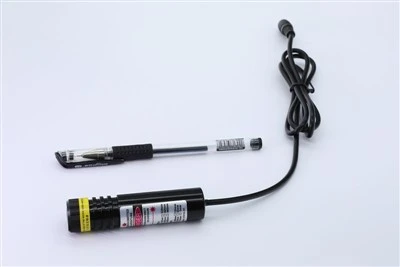
Next up is the Cartridge or Pigtail package, which is the workhorse of industrial machine vision. If TO Can is the compact commuter car, the cartridge is the heavy-duty truck—built to handle tough environments and customizable to almost any need. A pigtail module is essentially a TO Can or diode chip mounted inside a longer metal or plastic housing, with a flexible electrical cable (the pigtail) sticking out one end and often a collimating lens on the other. The collimating lens is what makes it stand out: it turns the diverging laser beam from the diode into a tight, parallel line or spot that can travel several feet without losing intensity. I’ve seen pigtail modules used in everything from automotive paint inspection (where they bounce a thin line across a car body to find dents too small to see with the naked eye) to wood processing (checking for knots and grain inconsistencies in 10-foot planks). What I love about pigtail packaging is the flexibility. You can choose different lens types—line generators, spot generators, even crosshairs—right at the time of order, no extra machining required. The housing is also usually threaded, so you can mount it directly to a camera or a rig with standard brackets. Another bonus: if a lens gets damaged, you can unscrew it and replace it without swapping the whole module, which saves downtime and money. The only caveat is that you have to handle the pigtail carefully—crimping the cable too tight or yanking it can break the internal connections. That’s why we always send out a small instruction sheet with every pigtail module, reminding integrators to use strain relief when mounting them.
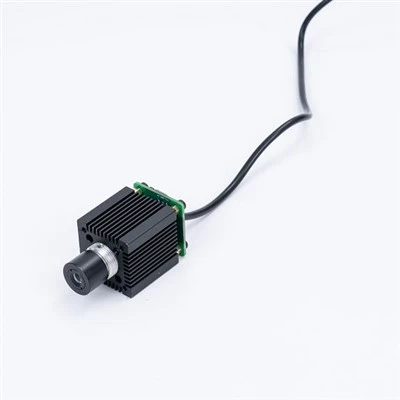
For applications where size doesn’t matter, but ruggedness and customizability do, there’s the External Module or Chassis-Mounted package. This is the big brother of the pigtail: instead of a tiny diode chip, the chassis-mounted package houses an entire laser system, often with its own power supply, cooling fans, and control circuits, all in a sturdy metal box. I worked on a project a few years back for a steel mill that needed to inspect 12-foot wide steel sheets for surface cracks as they rolled off the production line at 50 miles an hour. The module we supplied was a chassis-mounted package: it had two high-power laser lines mounted side-by-side, a built-in cooling system to handle the heat from the 10W diodes, and a digital interface that let the mill’s control team adjust the laser’s intensity from a central screen. This form factor is also popular for lab settings, where researchers might need to swap out different laser wavelengths or adjust focus on the fly—something you can’t do with a TO Can or pigtail module. The downside? Chassis-mounted packages are bulky, so they’re not ideal for small robots or compact automation cells. They also draw more power, so you need to make sure your facility has the electrical capacity to support them. But if you’re running a large-scale, high-demand operation, the chassis-mounted package is worth every penny.
A newer form factor that’s been gaining steam over the last five years is the Surface Mount Device (SMD) package. If you’ve ever looked at a circuit board and seen tiny, flat components soldered directly to it, you know what an SMD is. For machine vision laser modules, SMD packaging is small enough to fit directly onto a camera’s PCB, eliminating the need for extra cables or mounts. I first saw SMD laser modules at a trade show in 2019, and I’ll admit I was skeptical at first—how could a tiny, flat component hold up to the vibration of a high-speed pick-and-place machine? But a client of ours took a chance on them for their electronic component inspection line, and they’ve been running for four years with zero issues. SMD packages are usually around 3mm x 3mm in size, making them perfect for compact applications like tiny sensor arrays or wearable medical devices. They also use less power than other packages, which is a big plus for battery-powered systems. The tradeoff is that they’re even smaller than TO Can modules, so they’re harder to align and repair. If an SMD module fails, you usually have to desolder it and replace the whole component, which can be a hassle for some integrators. But for applications where size and low power are top priorities, SMD is the way to go.
We can’t talk about machine vision laser packaging without mentioning fiber-coupled laser modules, a specialized form factor used for the most high-precision applications. Fiber-coupled modules take the laser light from the diode and feed it into a glass optical fiber, which then carries the light to a separate head that emits the beam. I’ve used these modules for semiconductor wafer inspection, where even a tiny misalignment can ruin a $10,000 wafer. The fiber isolates the laser diode from vibration and heat, so the beam stays perfectly aligned even if the module is mounted in a different part of the facility. The head at the end of the fiber can be tiny—sometimes just a few millimeters in diameter—so you can get the laser right up close to the part you’re inspecting without worrying about the module itself getting in the way. The downside? Fiber-coupled modules are more expensive than other forms, and if the fiber gets damaged, it’s hard to repair. But for applications requiring sub-micron precision, there’s no better option.
Over the years, I’ve seen integrators make the same mistake over and over again: picking the cheapest packaging form without thinking about the environment the module will be working in. I once had a client who bought a batch of cheap TO Can modules for a warehouse that had high humidity and dust. Within six months, half the modules had failed because dust got past the crimped seal and scratched the glass window. We replaced them with pigtail modules, which had a hermetic seal and a protective housing, and they’ve been running for five years now. That’s why I always tell people: the best packaging isn’t the newest or the smallest—it’s the one that fits your specific use case. If you’re building a compact drone for crop inspection, SMD is perfect. If you’re inspecting heavy industrial parts, a pigtail or chassis-mounted module is better. If you need sub-micron precision for semiconductors, go fiber-coupled.
At our company, we’ve spent years testing every one of these packaging forms to make sure they hold up to the demands of real-world manufacturing. We stock all the common sizes and can even customize packaging for specific projects—whether you need a special lens for a non-standard line, a longer pigtail cable for hard-to-reach places, or a chassis-mounted module with a built-in cooling system. We work with small startups building new automation tools and large corporations running 24/7 production lines, and we take pride in helping them pick the right laser module for their needs. If you’re not sure which packaging form is right for your project, or if you’re looking for a reliable supplier to source high-quality machine vision laser modules, feel free to reach out and start a conversation. We’re here to help you troubleshoot, customize, and find the perfect solution for your application.
Long Working Distance Laser Module References
- Gole, J. (2021). Laser Diode Packaging: Design, Materials, and Reliability. SPIE Press.
- Machine Vision Industry Association. (2022). Industrial Laser Sources for Machine Vision: A Practical Guide. MVIA Technical Report Series.
- Okamoto, K. (2019). Compact Laser Packaging for Miniaturized Machine Vision Systems. Journal of Optical Engineering, 58(11), 115102.
- Smith, A. et al. (2020). Rugged Laser Packaging for Harsh Industrial Environments. International Journal of Advanced Manufacturing Technology, 110(9-12), 2845-2857.
Changshu Desheng Optics Electronics Co., Ltd.
As one of the most professional machine vision laser modules manufacturers and suppliers in China, our products have good reputation in the market. Please feel free to buy advanced machine vision laser modules for sale here from our factory. Good service and quality products are available.
Address: 8A, Yineng science and technology industrial park, No.183, Yinhe Road, Southeast Development Zone, Changshu, Jiangsu Province, China.
E-mail: desheng1@dershinelaser.com
WebSite: https://www.ds-lasers.com/
