If you’ve ever shopped for wheel hubs—whether for a heavy-duty work truck, a race car, or a custom RV—you’ve probably stared at a spec sheet and wondered: “What does that weight capacity number even mean, and do I really need to trust it?” As someone who’s spent the last 12 years running a small, family-owned wheel hub supply business, I can tell you this isn’t just a random number pulled from a spreadsheet. It’s the difference between a safe haul to a job site, a smooth lap at the track, or a catastrophic failure on the road. Let me break this down like I do with every customer who calls, because I’ve seen firsthand what happens when weight capacity is overlooked. Wheel Hub
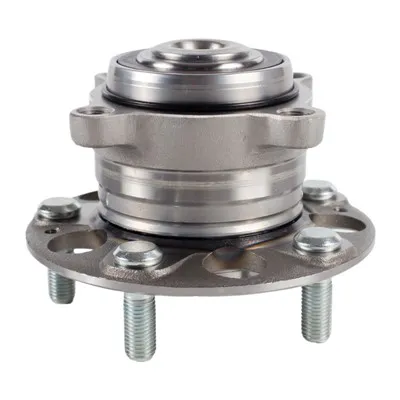
First, let’s start with the basics: what a wheel hub actually does, because its job directly ties to its weight capacity. A wheel hub is the central component that connects your wheel to your axle, bearing the load of the vehicle, its cargo, passengers, and the force of braking, turning, and even potholes. It’s not just a metal disc with bolt holes—though that’s what it looks like at first glance. Under pressure, it’s a mix of material strength, design engineering, and rigorous testing, all of which play into how much weight it can safely hold.
I get calls every week from new customers, some small fleet managers, others hobbyist builders, who ask for a “hub that can handle 10,000 pounds” like it’s a one-size-fits-all request. But here’s the first thing I always explain: wheel hub weight capacity isn’t a single number. It depends on three key factors: material, design, and testing. Let’s go through each, because if you skip understanding these, you’ll end up with a hub that works for a month, then cracks or gives out when you need it most.
Let’s start with material. Most quality wheel hubs are made from either cast steel or forged steel, and the difference in their weight capacity is massive. Cast steel is melted and poured into a mold, which is cheaper and works for lighter loads, but it has tiny internal voids that can turn into cracks under stress. Forged steel, on the other hand, is heated and hammered into shape, which aligns the metal’s grain structure to be stronger along the axis of the load. I’ve seen forged hubs hold 30-40% more weight than cast steel hubs of the same size, because their molecular structure is much more consistent. A few years back, I had a customer who tried to save $20 on a set of cast hubs for his 14,000-pound dump truck. Within three months, one of the front hubs cracked mid-drive, sending his truck into a ditch. The replacement cost? Not just the new hubs, but a new axle, a tow, and a week of downtime on his job. That $20 “savings” cost him over $15,000. I never let a customer forget that story when they ask about material.
Next is design. A hub’s shape, the size of its bolt circle, the thickness of its mounting flange, and even how it connects to the axle all affect weight capacity. For example, a hub with a six-bolt pattern is almost always stronger than a four-bolt pattern, because the load is spread across more bolts. The flange—where the wheel mounts—needs to be thick enough to distribute the wheel’s load without bending, and the area where the hub meets the axle shaft has to match the axle’s diameter to prevent slippage. We design all our hubs using CAD software, and every design is tested under simulated load conditions before we put it into production. We don’t just make a hub and say “it works”; we run computer simulations that mimic 100,000 miles of heavy hauling, hard braking, and cornering to make sure it holds up.
Then there’s testing, which is where a lot of cheaper suppliers cut corners. The only way to get an accurate weight capacity number is to test the hub under real-world stress, not just static weight. Static weight is how much the hub can hold sitting still, but dynamic weight—how much it can handle while moving, turning, and braking—is the real measure. A hub might hold 10,000 pounds of static weight, but under hard braking at 60 mph, that number drops. We use a hydraulic press to test our hubs dynamically, applying cyclic loads to simulate the force of driving over rough terrain for years. Every batch of hubs we make goes through this testing, and we keep records for every order, because a customer’s safety is on the line with every hub we ship.
Now, let’s talk about what a wheel hub’s weight capacity is actually measured in, because that’s another point of confusion. Most suppliers list two numbers: static load capacity and dynamic load capacity. Static is the maximum weight the hub can support when the vehicle is stationary, parked, with no movement. Dynamic is the maximum weight it can safely handle when the vehicle is in motion, including acceleration, braking, and turning. For nearly all applications, dynamic load is the number you should care about, because that’s how your hub will be used. For example, a trailer hub might have a static capacity of 6,000 pounds and a dynamic capacity of 5,200 pounds—you should never load that trailer heavier than 5,200 pounds when it’s moving, even if the static number is higher. I always tell customers to leave a 10-15% buffer between their total vehicle load and the hub’s dynamic capacity. Why? Because weight distribution plays a role, too. If you pile all your cargo on one side of a trailer, that puts more load on the hub on that side, so a buffer prevents overloading even if the weight isn’t evenly distributed.
Wait, let’s get into weight distribution, because that’s a common mistake I see. A customer might tell me their trailer is 10,000 pounds total, so they order hubs rated for 10,000 pounds. But if that trailer has two axles, each hub is only supporting half the total weight—so 5,000 pounds per hub. If those hubs have a dynamic capacity of 5,500 pounds, that’s safe. But if it’s a single-axle trailer, both hubs share the total load, so each hub is supporting 5,000 pounds for a 10,000-pound trailer. That changes everything. I make every customer walk through their exact vehicle setup with me—number of axles, total loaded weight, where cargo is placed—before I recommend hubs. I once had a customer who ordered hubs rated for 8,000 pounds for a single-axle 12,000-pound trailer. The hubs he got were rated for 4,000 pounds each, so total capacity was 8,000 pounds—perfect for two axles, but way too low for a single axle. He called me panicking two weeks before a big cross-country move, and we rushed him a set of higher-capacity hubs at a discounted rate, no extra cost. That’s the kind of partner I want to be, not just a supplier who sells you the first thing you ask for.
Now, let’s address a myth I hear all the time: “I can upgrade to higher-capacity hubs without changing anything else on my vehicle.” That’s almost never true. Hubs are designed to work with specific axle shafts, bearings, and brake systems. If you put a higher-capacity hub on a standard axle, that axle might not be strong enough to handle the extra load, and you’ll end up with a bent axle instead of a failed hub. A few years back, a race car client of mine wanted to upgrade his hubs to handle more power, but he skipped upgrading his axle and brakes. He went out for a test lap, and the axle bent under acceleration, costing him the entire race and a trip to the repair shop. We had to work with his team to match the hub upgrade to all his other powertrain components, and he’s been a loyal customer ever since. Weight capacity isn’t just about the hub—it’s about the whole system.
So, what’s the average weight capacity for common applications? Let’s break it down, since that’s probably what you’re here for. For light-duty passenger vehicles—sedans, small SUVs, pickup trucks—standard wheel hubs have a dynamic capacity of 1,500 to 3,500 pounds each. That’s enough for a passenger vehicle with a few people and some cargo. For medium-duty trucks, work vans, and smaller trailers, you’ll find hubs rated from 4,000 to 8,000 pounds dynamic capacity. That’s for hauling a few tons of equipment, or a medium-sized trailer. For heavy-duty applications—dump trucks, semi-trailers, RVs, and agricultural equipment—hubs can have dynamic capacities from 10,000 pounds all the way up to 25,000 pounds per hub. I’ve shipped hubs with even higher capacities for specialty military and construction equipment, but those are custom orders built to exact specifications.
But here’s the thing: if your application is on the edge of that range, you need to go higher. I had a customer who ran a landscaping business with a 10,000-pound single-axle trailer. He was using hubs rated for 5,000 pounds dynamic, but when he loaded the trailer with full dirt and 2000 pounds of equipment, the hubs were working at their maximum. One hub started making a grinding noise halfway through a job, and he called me at 7 a.m. panicking. I got him a set of 6,000-pound hubs that day, and we walked him through properly torquing them, which is another often-overlooked step in ensuring weight capacity. Torquing the lug nuts to the manufacturer’s specification keeps the load evenly distributed across the hub, so you don’t put extra stress on one spot. Even the best hub will fail if your lug nuts are too loose or too tight.
Now, let’s talk about how suppliers list weight capacity, because not all numbers are created equal. Some suppliers will list “gross axle weight rating” (GAWR) instead of individual hub capacity, which can be confusing. GAWR is the total weight the entire axle can support, so if an axle has a GAWR of 10,000 pounds, that means each hub on that axle is rated for 5,000 pounds—assuming it’s a two-axle set. But some suppliers will fudge numbers, claiming a hub has a higher capacity than it actually does to undercut competitors. That’s why I always tell customers to buy from suppliers who can provide third-party test reports for their hubs. We send every customer a copy of our test certificates with their order, because I’m not afraid to show that our numbers are accurate. I once had a customer who compared our hubs to a cheaper supplier, and the cheaper supplier’s hubs had a 20% lower dynamic capacity than they claimed on their spec sheet. The customer switched to us that day, and he’s still with us three years later.
At the end of the day, the weight capacity of a wheel hub isn’t just a number on a spec sheet. It’s a promise that the component holding your vehicle, your cargo, and sometimes even your livelihood will do its job when you need it most. As a hub supplier, my job isn’t just to sell you a part—it’s to make sure that part is the right one for your specific needs, that it’s built to last, and that it’s safe. I’ve seen too many customers cut corners and end up paying the price, and I want to help you avoid that.

If you’re shopping for wheel hubs and you’re not sure what weight capacity you need, or if you have questions about material, design, or testing, I’m here to help. I don’t push the most expensive hub on every customer—I ask questions, listen to your needs, and recommend the right hub for your budget and application. Whether you’re a fleet manager with 20 work trucks, a hobbyist building a custom hot rod, or a small business owner needing hubs for your delivery vans, we have the hubs you need, and we’ll back them up with the support you deserve. Contact us today to discuss your wheel hub requirements, and let’s make sure you get the right part for the job.
Wheel Hub References
- Society of Automotive Engineers (SAE) International. “Wheel Hub Strength and Load Capacity Testing Standards.” 2021.
- American National Standards Institute (ANSI). “Specification for Wheel Hubs for On-Road Motor Vehicles.” ANSI/SAE J1139, 2019.
- Automotive Parts Manufacturers Association (APMA). “Heavy-Duty Wheel Hub Material and Load Capacity Guidelines.” 2022.
- National Highway Traffic Safety Administration (NHTSA). “Vehicle Component Load Ratings and Safety Requirements.” 49 CFR Part 571, 2020.
Guangzhou Pinxiu Auto Parts Co., Ltd.
As one of the most professional wheel hub manufacturers and suppliers in China, we warmly welcome you to buy durable wheel hub for sale here from our factory. All customized products are with high quality and competitive price. Contact us for pricelist.
Address:
E-mail: pinxiu@cclparts.com
WebSite: https://www.cclauto-parts.com/
