If you’ve ever stood in front of a heavy, industrial armory door—whether at a secure storage facility, military installation, or high-risk commercial site—you’ve probably wondered how you’d get out in an emergency. That’s a question I get at least a dozen times a week, from new clients reviewing our product specs to maintenance teams troubleshooting existing installations. As a supplier of armory doors, I don’t just sell heavy metal and locking systems; I’m the person who has to back up every design with real-world safety, regulatory rules, and practical on-the-ground use cases. So let’s cut through the spec sheets and get to the core question: Do armory doors have emergency release? Armory Doors
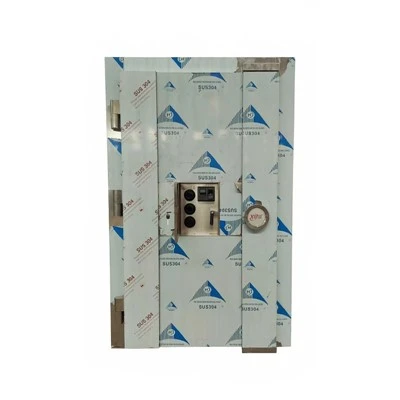
First, let’s clear up a common misconception. Armory doors aren’t the same as the rolling metal doors you see on a neighborhood warehouse or a retail store front. These aren’t doors you can yank open in a hurry if the power cuts out. They’re heavy-duty, engineered for controlled access, used to store weapons, ammunition, classified materials, or high-value assets that need 24/7 security. That means their emergency systems aren’t an afterthought—they’re a non-negotiable part of the design, mandated by federal and international regulations, not just a nice feature.
Let me start with the hard rules. For anyone in the U.S. dealing with armory or secure storage, the National Fire Protection Association (NFPA) has strict standards here—NFPA 80 for fire doors, and NFPA 101 for life safety in commercial and institutional facilities. Then there’s the Department of Defense (DoD) criteria for military armories, which are even more stringent. I’ve spent years making sure every door we supply meets or exceeds these, because cutting corners here isn’t just a compliance issue—it’s a liability nightmare. The DoD, for example, requires every armory door to have an interior emergency release that doesn’t require tools, keys, or external power to operate. No exceptions. That’s not something you can skip to save a buck.
Now, what does that emergency release actually look like? It’s not a flimsy handle you can yank off with one pull. On our standard armory doors, the interior release is a stainless steel, push-bar style mechanism—same kind you’d see on a commercial fire exit, but reinforced to hold up to the heavy door’s weight and the high-security locking system. The bar is mounted horizontally across the interior side of the door, at roughly waist height, and it’s designed to disengage all the locking bolts at once—those heavy, deadbolts that extend into the door frame, sometimes 10 or 12 inches, that keep the door secure during normal use.
Here’s the fine print that most people don’t think about: it has to work when the door is locked. I can’t tell you how many times a facility manager has called me panicking because the power went out, the door locked automatically, and they thought their team was trapped. But our emergency releases are mechanical, not electronic (we do have electronic backups, but the manual system is primary). That means even if the entire building loses power, the lock system’s internal mechanism will disengage as soon as you press that bar. No keys, no codes, no power source required—just plain, mechanical force. That’s a non-negotiable for all our products.
But wait—what about doors that are particularly large or heavy? I’ve supplied doors for armories that are 10 feet tall and 8 feet wide, weighing over 1,000 pounds. Yanking that door open with just a push bar sounds impossible, right? We solve that with a secondary feature: an assist spring or hydraulic cylinder built into the door frame. That takes the weight of the door off the user when they activate the emergency release. So instead of fighting a 1,000-pound slab of steel, you’re pushing a door that feels like it’s on a gentle hinge. We test every single door we ship to make sure that assist works—even for the 2 a.m. emergency drill when someone’s wearing bulky firefighting gear and moving fast.
There are a few edge cases where emergency release works a little differently, but still meets all safety rules. For example, some high-security vault doors, which are a subset of armory doors, have a combination of a key and a dial for regular access. Their emergency release is usually a special lever on the interior, marked clearly, that will disengage the entire lock system. These aren’t for public use—they’re only for trained personnel in an emergency. We make sure that lever is clearly labeled in 2-inch high, bold letters, and it’s located where no one can accidentally bump into it during normal use, but easy to find in a panic.
I do get questions from people who are worried about unauthorized access. “If it opens from the inside, what’s stopping someone from breaking in through the door?” Let me address that. The emergency release is only accessible from the interior of the secure space. There is no way to trigger it from the outside. The only way to open the door from the outside is with a key, a code, or biometric access—all controlled, secure methods. That balance is what makes these doors work: you get life safety for people inside, while keeping the secure area locked down from anyone outside. I’ve never had a facility report an unauthorized exit via emergency release, because it’s designed to only work if you’re already inside the secure space and need to get out.
What about power failures or lock malfunctions? I’ve worked with armories that were built in the 1970s, before electronic locking systems were common. Even those doors have emergency releases. Back then, it was a manual handle connected directly to the lock bolts, no electronics at all. It’s a little more work—you have to turn the handle hard to disengage all the bolts—but it works. We service a lot of these older doors, and when we upgrade them, we always keep the original manual emergency release intact, just in case the new electronic system fails. That’s redundancy, and it’s part of our promise to customers: we don’t remove life safety features, we enhance them.
I’ll be honest with you—there are some low-quality, cheap armory door manufacturers that cut corners here. I’ve seen doors that advertise “emergency release” but require a special key, or only work if the power is on. Those doors don’t meet NFPA or DoD standards, and they’re a ticking time bomb. When a fire breaks out, or someone has a medical emergency inside an armory, you don’t have time to hunt for a key or wait for power to come back on. That’s why we spend the extra money on stainless steel components, test every release mechanism over 10,000 cycles (the equivalent of 20 years of use), and make sure every door we ship has clearly marked emergency instructions posted right next to the release bar.
Let’s talk about real-world examples, because that’s what matters. Last year, I worked with a small military reserve armory in Ohio. They had an issue during a storm that knocked out power for 12 hours. Their automatic locking system locked down when the power failed, and the staff had to move ammo and gear to a temporary storage site. They were worried about being trapped inside the main armory. But their original doors—supplied by our company 15 years ago—had the mechanical emergency release. The armory commander told me later that in less than 10 seconds, three people had pressed the bar, and the entire lock system disengaged. They were able to get in and out safely, no injuries, no delays. That’s the kind of outcome we design for.
Another example: a law enforcement armory in Texas that had a fire drill last quarter. The fire department’s protocol is to test the emergency egress of every secure space. They timed how long it took for an officer to exit the armory once the alarm went off. The door’s emergency release worked in 8 seconds. The only delay was the officer grabbing their gear— the door itself was ready to go immediately. That’s exactly what we want: safety that works when you need it, no hassle, no guesswork.
So to circle back to the original question: Do armory doors have emergency release? The short answer is yes, always—if they’re built to code and from a reputable supplier like our team. The longer answer is that it’s not a generic add-on; it’s a core component of the door’s design, engineered for reliability, tested for every possible scenario, and mandated by safety rules that exist because a locked door that can’t be opened in an emergency is a disaster waiting to happen.
If you’re outfitting a new armory, upgrading an existing secure storage space, or just making sure your current doors meet safety standards, you don’t have to settle for doors that cut corners. Our team has been supplying armory doors for over two decades, working with military bases, law enforcement agencies, and commercial storage facilities across the country. We don’t just sell doors—we provide the documentation, inspections, and support to make sure every emergency release works when you need it.
If you’re interested in learning more about our armory door systems, reviewing test reports, or discussing your specific project needs, reach out to our team to schedule a consultation. We can walk you through the different emergency release options, regulatory requirements for your area, and help you find a solution that balances security, safety, and reliability.
Door Unit For Safe Room REFERENCES
NFPA 80, Standard for Fire Doors and Other Opening Protectives, National Fire Protection Association
NFPA 101, Life Safety Code, National Fire Protection Association
DoD 4160.21-M, Design, Construction, and Maintenance of Armories and Ammunition Storage Facilities, U.S. Department of Defense
International Building Code (IBC) Chapter 10, Means of Egress, International Code Council
Hebei Xinrui Intelligent Technology Development Group Co., Ltd.
With abundant experience, we are one of the most professional armory doors manufacturers and suppliers in China. We warmly welcome you to buy high quality armory doors at competitive price from our factory. If you have any enquiry about customized service, please feel free to email us.
Address: No.1, Building B, Intelligent Security Industry Park, Economic Development Zone, Wuyi County, Hengshui City, Hebei Province
E-mail: shinraysafe@163.com
WebSite: https://www.shinraysafe.com/
