If you’ve ever wondered how a tiny pacemaker part keeps a heart beating steady, or why a surgical tool makes a cut so clean it heals faster, the answer almost always ties back to medical precision components. I’ve been in this game for over a decade, running a small, tight-knit team that makes these exact parts, and I can tell you—they’re way more than just “small metal bits.” Let me break this down like I would to a new intern, no stuffy jargon, just real talk that makes sense for anyone who’s ever needed a medical device, or works with suppliers like us. Precision Components

First off, let’s kill the confusion. A lot of people mix up medical precision components with, like, the parts in a toy drone or a phone. Nah. These are parts built specifically for the healthcare space—think implants, diagnostic machines, surgical tools, even the stuff that goes into lab testing equipment. The big difference? They don’t just have to work; they have to work perfectly, every single time, when someone’s life is on the line. No room for error here.
Take a quick example: the tiny titanium screw that holds a hip implant in place. That’s one of our bread-and-butter parts. It’s not just a regular screw off the hardware store shelf. For one, it has to be within 0.001 inches of its exact size—if it’s even a hair too big, it won’t fit in the bone; too small, and it might loosen in a year. We also can’t use cheap steel that’ll rust inside a body, so it’s medical-grade titanium, polished so smooth there’s no place for bacteria to hide. That’s the precision part of it—we’re not cutting corners here.
Now, what else counts as a medical precision component? Let’s run through the common ones we make, to give you a clear picture. There are implantable parts: pacemaker leads (those thin wires that connect the device to the heart), insulin pump needles (so small you can barely see them, but they have to be sharp enough to pierce skin without hurting), and joint components for knees or shoulders. Then there are surgical tools: the tiny forceps surgeons use to operate on eyes, or the blades for scalpels that cut through tissue without tearing it. And don’t forget diagnostic stuff—like the tiny nozzles in blood analyzers that drop exact amounts of blood onto test strips, or the parts in MRI machines that have to be non-magnetic so patients don’t get pulled around during a scan.
Wait, let’s talk about the specs, because that’s where the magic (and the headache) happens. When a customer comes to us with a new part design, they don’t just say “make this.” They give us tolerances that are so tight, most people would read them and think they’re typos. Like, ±0.0005 inches. That’s smaller than the width of a human hair. If we’re off by even that much, the part gets scrapped—no exceptions. We use CNC machines that run 24/7 to hit those numbers, but even then, we check every single part under a microscope. No cutting corners here, because a part that’s off could make a patient’s implant fail, or a test give a wrong result that leads to misdiagnosis.
Another big thing: materials. Medical parts can’t just be any material. They have to meet strict standards, like FDA guidelines in the US or CE marks in Europe. So we stick to materials like medical-grade titanium, surgical stainless steel, medical-grade plastics (like PEEK, which is super strong and bio-compatible), and even ceramics for some joint parts. No cheap, untested stuff. We work with labs to test every batch of material, so we know it’s safe to put inside a body, or use in a sterile lab environment.
Now, why does this matter more now than ever? Because medicine’s getting way more advanced. Ten years ago, a pacemaker was a big bulky box under the skin. Now they’re tiny, even have wireless charging. That means the parts inside have to be smaller, more precise, and able to handle being in a body for 10+ years. Minimally invasive surgery is another big one—surgeons make cuts the size of a dime, so their tools have to be tiny, but still strong enough to work. If those tools flex or break mid-operation, that’s a huge problem. We’ve had customers send us designs for tools that are smaller than a pencil eraser but have to hold 5 pounds of pressure. That’s the kind of stuff we deal with every day.
I get it, a lot of people outside this industry see these parts as “invisible.” No one posts a TikTok of the tiny screw holding their knee together. But trust me, they’re the backbone of modern medicine. Take the COVID pandemic, for example. When diagnostic labs needed to crank out thousands of tests a day, the nozzles that drop samples couldn’t be inconsistent. If one nozzle dropped 10% more or less sample, the test result would be wrong. Our team worked extra hours during that time, making sure those parts were perfect, because we knew they mattered.
Now, let’s be real—working with medical precision components isn’t always easy. There are strict regulations, high stakes, and customers who have zero tolerance for mistakes. But that’s exactly why we love it. We’re not just making parts; we’re helping doctors save lives, helping patients get back to their families. That’s way more meaningful than any other manufacturing job I could think of.
If you’re someone in the medical space—whether you’re designing a new implant, building surgical tools, or running a diagnostic lab—you know how hard it is to find a supplier who actually gets this. A lot of companies say they make medical parts, but they cut corners on quality, or can’t hit those tight tolerances when you need them. That’s where we come in. We’re a small supplier, so we actually talk to our customers—no endless phone trees, no getting passed off to a sales rep who doesn’t know what a tolerance is. We’ll sit down with you, look at your design, tell you if something’s possible, help you tweak it if needed, and make sure every single part is up to code.
Wait, let’s make this relatable for a second. Last year, we had a startup coming out of med school designing a new insulin pump for kids. Their old pump was bulky, hurt kids’ skin, and required big needles. They came to us with a tiny needle design that was 50% smaller than anything on the market, with a bevel that cut skin smoother to avoid scarring. We worked with their engineering team for weeks, testing different materials and cutting angles, to get it just right. Now that pump’s on the market, and parents tell us their kids barely even feel the needle. That’s the stuff that makes the long nights worth it.
Another thing: customization is huge here. No two medical parts are exactly the same. One customer might need 100 identical pacemaker leads a month; another might need a single custom screw for a rare orthopedic implant. We can handle both big orders and small, because we have the machines and the team to adapt. We don’t make generic parts—every part we make is tailored to what our customer needs, because that’s what the medical industry demands.
Let’s also clear up a common myth: people think “precision” means super expensive parts. Yeah, some parts are pricey, but a lot of the time, it’s about value. You’re paying for consistency, for safety, for a part that won’t fail when it matters. A cheap, off-spec part might save a few bucks upfront, but if it leads to a patient needing another surgery, that’s way more expensive and way more harmful. We price our parts fairly, because we know our customers are often working on tight budgets too—we’re not out to gouge anyone, we just want to make parts that work, and keep people safe.
So, if you’re in the market for medical precision components—whether it’s implantable parts, surgical tools, diagnostic equipment parts, anything like that—reach out. We’re here to help. We’ll walk you through the process, answer all your questions (no matter how detailed), and give you the quality you need. We’re not just a supplier; we’re a partner, and we take that seriously.
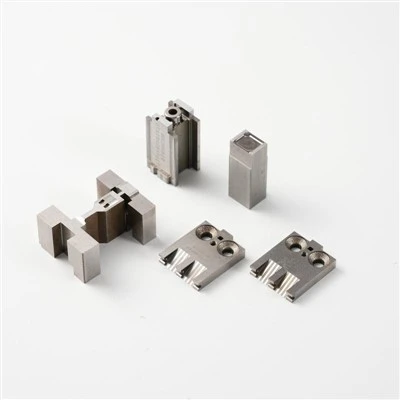
At the end of the day, medical precision components are all about care. They’re small, but their impact is huge. Every time a surgeon uses a tool we made to save a life, every time a patient gets an implant that works the way it should, that’s our win. We don’t make a big deal out of it, but we’re proud of the work we do. If you’re someone who needs parts that you can trust, hit us up. We’d love to hear about your project.
Stamping Die References:
- American Society for Testing and Materials. (2022). Standard Guide for Medical Device Components. ASTM International.
- U.S. Food and Drug Administration. (2021). Quality Systems Regulation for Medical Devices. FDA.gov.
- International Organization for Standardization. (2019). ISO 13485: Medical Devices – Quality Management Systems – Requirements for Regulatory Purposes. ISO.
- Medical Plastics News. (2023). Trends in Precision Components for Minimally Invasive Surgery. MPN Publishing.
- Journal of Medical Engineering & Technology. (2022). Material Selection for Long-Term Implantable Precision Components. Taylor & Francis.
Dongguan Hezong Precision Technology Co., Ltd.
With abundant experience, we are one of the most professional precision components manufacturers and suppliers in China. Please feel free to buy durable precision components made in China here from our factory. All customized products are with high quality and competitive price.
Address: No.973, Dalang Section of Wozhang Road, Dalang Town, Dongguan City, Guangdong Province
E-mail: postmaster@hezongjingmi.com
WebSite: https://www.hzpre.com/
