Hey there! If you’ve been hanging around the plastic profiles game for a minute, you’ve probably stumbled on this question before: Can a standard plastic profiles machine actually make flexible plastic profiles? I get it—when I’m chatting with clients, that’s hands down one of the top questions I hear, right after “How fast is this line?” or “Do you guys offer after-hours support?” I’m not gonna lie, for the first few years I was in this biz, I’d have given a pretty wishy-washy answer. But now? After troubleshooting lines for hundreds of fabricators, tweaking settings on everything from tiny PVC edge trim to flexible TPE window gaskets, I can give you a straight, science-backed yes—with a few caveats that’ll save you a ton of headaches. Plastic Profiles Machine
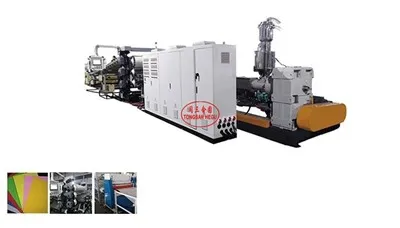
Let’s start with what most people actually mean when they say “flexible plastic profiles.” It’s not just bendy for 2 seconds. We’re talking stuff like door seals that snap back into shape after being crushed, food-grade TPE edge guards for kids’ play tables, or even flexible PVC tubing for medical devices that need to flex with a patient’s movement. The key here is the material, first and foremost. A lot of folks think a “plastic profiles machine” is a one-trick pony—like, if it’s set up for rigid PVC pipe, it can never do bendy stuff. But that’s not how extrusion works, and that’s where I see a lot of new fabricators mess up.
Wait, let’s break down the basic extrusion process real quick, no boring textbook jargon. You load plastic resin (or a resin blend) into a hopper, it melts down in the barrel with a rotating screw, gets pushed through a die shaped exactly like your profile, cools down so it keeps that shape, then gets cut or coiled. The flexibility of the final profile doesn’t live in the machine’s brand or color—it lives in the material mix. Rigid profiles (like window frames) use mostly unplasticized PVC (UPVC), which is super stiff. Flexible ones use plasticized PVC (soft PVC), TPE, TPU, or even some blends of PVC and EPDM, with a ton of plasticizers added to make the chains slide past each other instead of locking up tight.
But here’s the thing: even if you have the right material, a standard plastic profiles machine can’t just flip a switch to make flexible stuff. You have to tweak a few parts of the line, and that’s where most people get stuck. Let’s talk about the die first. A lot of rigid dies are made with sharp, tight corners to hold that rigid shape. For flexible profiles, you need a die that’s a little more forgiving—rounded internal edges, slightly wider flow paths. Wait, why? Because flexible materials melt differently. They don’t want to squeeze through narrow gaps like rigid resins do; they flow more like thick honey, not like toothpaste. If your die’s too tight, the material will shear too much, get too hot, and end up weak or too sticky to cool right. I learned this the hard way early on—we had a client who tried running soft PVC edge trim on a line built for rigid PVC siding, and their first 5 rolls came out with weird streaks and would crack after 1 bend. We swapped out the die for a flexible-specific one, adjusted the screw speed, and boom—perfect trim by the next morning.
Next up: the cooling system. This is a huge one that most new guys overlook. Rigid profiles cool super fast—usually with a water bath or vacuum tank that pulls the shape tight right when it exits the die. Flexible materials? They cool much slower, and if you yank them too fast, they’ll deform, or stay soft on the inside and hard on the outside, making them crack later. So for flexible profiles, you usually need a slower, more gradual cooling process. A lot of standard lines have a quick-cool vacuum tank, but if you add a longer, gradual cooling section—like a warm water bath first, then a cold water bath—you get consistent flexibility. I had another client a few months back making flexible TPE door seals; they were using a standard 10ft cooling tank and their seals were coming out warped. We added a 5ft warm water pre-cool section at 120°F, then a cold water section, and that fixed the warp issue entirely. No more sending bad parts back, which saved them like $15k in rework that quarter.
Screw design matters too. Most standard extruder screws are built for rigid materials, with a specific pitch that melts stiff resin evenly. For flexible materials, you usually need a screw with a longer transition zone, or a screw with a deeper flight. Wait, let’s explain that simply: the flight is the spiral part of the screw that pushes material through the barrel. A deeper flight gives flexible, low-viscosity melted material more room to flow without getting over-sheared. Shear is a big deal—too much heat from shearing the resin will break down the plasticizers that make the stuff flexible, turning your bendy profile into a rigid brick without warning. I’ve seen so many lines where the screw’s wrong for flexible material, and the client ends up adding more plasticizers, which makes the profile too soft and sticky instead of just right. It’s a balancing act.
Now, let’s get to the myth I hear all the time: “I need a ‘flexible plastic profiles machine’ specifically, not a regular one.” Yeah, you can buy a machine that’s pre-built for flexible stuff, but if you already have a standard line, you don’t have to ditch it. For small to mid-run fabricators, retrofitting a standard line with a new die, a few cooling tweaks, and maybe a different screw is way cheaper than buying a whole new machine. We’ve retrofitted over 70 lines in the last 2 years for exactly that—guys who started with rigid window frames and then got a contract for flexible playground edge guards, or food-grade flexible tubing, didn’t have to drop $50k on a new line. They spent $2-3k on parts and a day of our tech’s time, and they were off running.
But wait, there are limits. If you’re making ultra-flexible stuff—like a 1/8 inch thick TPE strip that can wrap around a pencil 360 degrees without cracking—you might need a line that’s optimized for very low viscosity materials, usually a larger extruder or a co-extrusion line if you’re adding a rigid core. But for 90% of the flexible profiles most fabricators actually make—seals, edge trims, gaskets, flexible tubing—your standard plastic profiles machine works, as long as you tweak those few parts.
Let’s talk about a real example to make this concrete. Last year, we had a client in Ohio who made rigid PVC siding for new homes, and they got a random order from a local garage door company for flexible rubber-like seals for overhead doors. They tried running it on their existing line with the rigid die, and their first batch was terrible—cracked when bent, too stiff at low temperatures, and streaky. They called us panicking, thought they had to turn down the whole $200k order. We sent a tech out the next week, swapped out their rigid die for a flexible-specific one with rounded flow paths, adjusted their screw speed from 60 RPM to 45 RPM to reduce shear, added a 4ft warm water pre-cool section, and tweaked their die temperature by 10°F. They ran the first 1000ft of seals that same day, and the garage door company signed off on it immediately. That client now runs flexible seals on that line 2 days a week, and rigid siding the rest—no new machine needed.
So what’s the takeaway here? If you’re asking “Can a plastic profiles machine make flexible plastic profiles?” the answer is almost always yes, as long as you’re not trying to make ultra-specialized, ultra-flexible parts, and you’re willing to tweak a few key components of your line. But here’s the catch: a lot of “flexible” plastic profiles have specific requirements—like food-grade safety, UV resistance for outdoor seals, or low-temperature flexibility for cold climates—that go beyond just machine settings. You have to make sure your machine’s adjustments line up with the material you’re using, too.

If you’re a fabricator looking to add flexible profiles to your product line but don’t know if your current line can handle it, or if you’re in the market for a new machine that can do both rigid and flexible profiles without breaking the bank, don’t guess on your own. We’ve helped hundreds of guys sort this out—whether it’s retrofitting an existing line, picking the right machine for your specific products, or troubleshooting if you’re already having issues with flexible profiles on your line. Skip the trial and error that costs you time and money, and chat with us directly. We don’t do sales fluff, we give straight answers based on lines we’ve actually worked on, not textbook theory.
Plastic Sheet Machine Reference
- Rosato, D. V., & Rosato, M. G. (2004). Extrusion: The Definitive Processing Guide and Handbook. William Andrew Publishing.
- Harper, C. A. (2002). Handbook of Plastics, Elastomers, and Composites. McGraw-Hill Education.
- Plastics Industry Association. (2021). Extrusion Processing Best Practices for Flexible Plastic Profiles.
Qingdao Tongsanhegu Plastic Machinery Manufacturing Co., Ltd.
With abundant experience, we are one of the most reliable plastic profiles machine manufacturers and suppliers in China. We warmly welcome you to buy durable plastic profiles machine for sale here from our factory. Quality products and reasonable price are available.
Address: West of Xixinzhi Village, Sanlihe District Jiaozhou, Qingdao City, Shandong Province, China
E-mail: info@tongsanhegu.com
WebSite: https://www.tongsanhegumachine.com/
