Hey everyone, if you’ve ever stood in a burning building (or even binge-watched a disaster movie and held your breath through the fire scenes), you’ve probably thought—what stops that fire from jumping from one room to the next? I’m Jake, and I’ve been selling fire-resistant windows for 8 years now, and let’s be real—most of the questions I get aren’t just from contractors or architects. Homeowners, small business owners, even people who’re just renovating their kitchen and want to stay safe hit me up with: “Do these windows actually stop fire from spreading, or is it just another sales pitch?” Fire-resistant Windows
First off, let’s cut the BS. There’s no one-size-fits-all answer here, but I’ve seen these windows work so many times I’d stake my reputation on ‘em. Let’s break it down like I’m chatting over coffee, no boring engineering jargon—promise.
What even is a fire-resistant window, anyway?
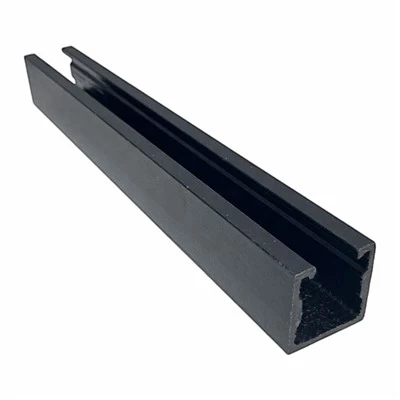
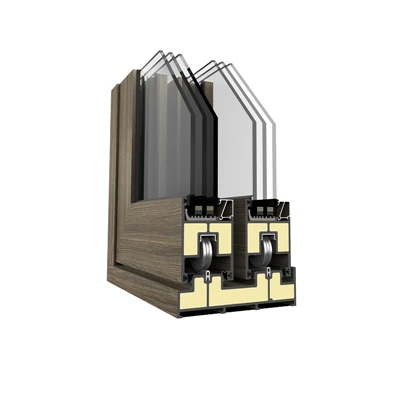
You know regular windows, right? The glass in your living room is just flimsy stuff that’ll crack if a basketball hits it, and if there’s a fire? That glass turns into shards in 5 minutes flat, or melts if the heat’s high enough. Fire-resistant windows aren’t that. They’re made with specialized glass—usually laminated with a gel or a ceramic core that expands when it gets hot. Wait, no, wait—let me get that right, it expands into an insulating barrier, not just shatters. And the frames? They’re not cheap aluminum that melts. They’re fire-rated frames, usually steel or fiberglass that don’t warp or give way for 20, 45, even 90 minutes, depending on what you need.
The key here is the rating. Like, when we say a window is “rated for 60 minutes,” that doesn’t mean it’s just tough. It means it passed a standardized test—think of it as the fire’s version of a grade. The test heats the window to over 1,000°F (way hotter than a typical house fire) and checks three things: does the glass stay intact so fire and smoke don’t go through? Does the window keep heat from passing through to the other side? And does it stop any hot gases or embers from leaking out? If it passes all that for 60 whole minutes, that’s a 60-minute rated window. No loopholes, no cutting corners.
Why regular windows fail fast (and what that means for fire spread)
Let’s use a real example I worked on last year. A small café in downtown had a grease fire behind the counter. The owner had old, non-rated windows. The fire was in the back kitchen, but within 3 minutes, the kitchen window cracked. The hot embers flew out, landed on the awning over the outdoor seating, and that spread the fire to the next building’s window in, like, 2 more minutes. By the time the fire department got there, two storefronts were on fire.
Compare that to a warehouse we outfitted a few months prior. A pallet of cardboard caught fire near a side wall with 90-minute rated fire windows. The fire got super hot, but the glass didn’t crack. The frames didn’t warp. The only smoke that got out was through the vents we installed, not the windows. The fire department was able to put it out before it spread to the next warehouse bay. That’s the difference.
Fire spreads in three main ways, right? Conduction (heat moving through stuff), convection (hot air and smoke floating), and radiation (heat waves shooting out). Regular windows fail at all three. The glass conducts heat, so the other side of the window gets hot enough to ignite whatever’s nearby. It cracks from convection, letting hot embers and smoke through. And it doesn’t block radiation, so that heat waves shoots through and starts fires on the other side. Fire-resistant windows block all three.
Wait, let’s not act like they’re invincible. If you leave a fire burning for 3 hours, even a 90-minute rated window might fail. But in most residential and commercial fires? The fire department shows up in 10 to 15 minutes, tops. So a 20 or 60-minute rated window is more than enough time to buy them time, and time is everything when stopping fire spread.
Common myths I hear all the time (and the real tea)
Myth 1: “Fire-resistant windows are all ugly and kill my view.” Nah. The tech has come so far. We put in windows for a family’s lake house last year—you couldn’t tell they were fire-rated from the inside. Clear glass, same size as regular windows, no weird tint. The only difference is the core, which you can’t see. So you get safety and a nice view. Win-win.
Myth 2: “They’re way too expensive. I can just replace my regular windows when I need to.” Yeah, maybe, but let’s do the math. A house fire can cost you hundreds of thousands in damage, and even worse, risk your life. A fire-rated window for a standard bedroom is like $150 more than a regular one—way cheaper than rebuilding a kitchen or saving lives. Also, if you’re in a wildfire zone? Most insurance companies give you a discount if you have fire-resistant windows. I’ve seen that first hand.
Myth 3: “They’re only for commercial buildings or fancy homes.” No way. We sell ‘em to single-family homeowners in wildfire areas, apartment complex managers, even school districts. A classroom window? If a fire starts in the hall, those windows can hold for 45 minutes, enough time for kids to get out. That’s not a “fancy” thing—that’s common sense.
What actually stops fire spread: it’s not just the window, but how you use it
Wait, hold on, I don’t want to act like these windows are magic. I once got a call from a guy who put a fire-rated window in his garage, but he mounted it right next to a wooden beam that was so close, when the fire got hot, the beam heated the window’s frame from the outside, and it failed early. The window worked, but his installation was off.
Or another time, a restaurant had a fire-rated window, but it was cracked before the fire even started (from a storm, obviously). The crack let smoke and embers through during the fire, so it didn’t work like it should. So it’s not just the window itself—it’s making sure you get the right rating for your space, and that it’s installed correctly. That’s why I always tell people to talk to someone (like me) before buying, not just go to the big box store and pick a random “fire-resistant” window.
Another thing: smoke. Most people don’t realize smoke is way more dangerous than fire for spreading. Fire-resistant windows block smoke too, right? Because the sealed glass and frames don’t let smoke seep through. That’s a huge deal—smoke inhalation is the #1 cause of fire deaths, not burns. So even if the fire is small, the window stopping smoke keeps you from passing out and makes it way easier for first responders to get in.
Real-world proof, not just sales stuff
I could tell you a hundred stories, but let’s stick to a recent one that’s fresh in my head. Last month, a townhouse in a residential area had a fire start in unit 2B from an electrical outlet. The units on either side had 60-minute fire-rated windows installed when the complex was built. The fire department showed up 12 minutes later, and because the windows didn’t fail, the fire only stayed in 2B. No damage to units 1B or 3B, no one had to move out. The tenant in 2B said she saw the glass start to darken, but it didn’t crack, so she was able to escape without getting hurt. That’s exactly what these windows are designed for.
Compare that to a neighboring townhouse complex that used regular windows. A similar fire started in one unit, spread to two others in 15 minutes, and the whole block had to be evacuated. The insurance company ended up raising everyone’s premiums because of it. I’m not here to bash regular windows—they’re fine for what they’re made for. They just aren’t made to stop fire spread.
So, to circle back to the original question: Do fire-resistant windows prevent fire from spreading?
Short answer: Yes, when they’re the right rating, installed correctly, and used for the right space. They don’t stop every fire forever, but they buy critical time—time for you to get out, time for the fire department to get there, time for the fire to be contained. That’s not “preventing fire from spreading in every single case”—that’s preventing it from spreading in the vast majority of cases, which is exactly what you want.
If you’re reading this and thinking, “Wait, I need these for my home, or my business, or my rental property,” hit me up. I don’t do pushy sales calls—we can chat about what your space needs, what ratings make sense, and how to get the best deal without cutting corners. Safety doesn’t have to be complicated or expensive, but it does have to be the right stuff.
References
Fire-resistant Door National Fire Protection Association. (2022). Fire Resistance of Building Components and Assemblies. NFPA 251: Standard Methods of Tests of Fire Tests of Building Construction and Materials.
Underwriters Laboratories Inc. (2021). Standard for Safety for Fire Tests of Window Assemblies. UL 108.
Insurance Institute for Business & Home Safety. (2023). Wildfire Resilient Building Guidelines.
Henan Enbuess Composite Materials Co., Ltd.
Henan Enbuess Composite Materials Co., Ltd. is one of the most professional fire-resistant windows manufacturers and suppliers in China, also supports customized service. Please feel free to buy bulk durable fire-resistant windows made in China here from our factory. Welcome to contact us for free sample.
Address: No.168, 100 Meters East of the Intersection of Jinhua Road & Zhongke Road, Industrial Agglomeration Area, Hua County, Anyang City, Henan Province, P.R. China
E-mail: leila.salesdir@enbuess.com
WebSite: https://www.enbuessfrp.com/
