Hey everyone, if you’ve ever dealt with oversized cargo that can’t just cram into a standard shipping container—like heavy machinery, wind turbine blades, industrial generators, or prefabricated steel beams—you’ve probably run up against break bulk terminals. As a third-gen break bulk supplier who’s hauled everything from farm combine harvesters to custom bridge segments across the Atlantic, I’ve spent more time than I can count staring at terminal charges, scratching my head, and sometimes even fighting to keep costs fair. Today, I’m breaking down what those break bulk terminal charges actually are, why they matter, and how us suppliers navigate the maze of them to keep your shipments moving without blowing your budget. Break Bulk
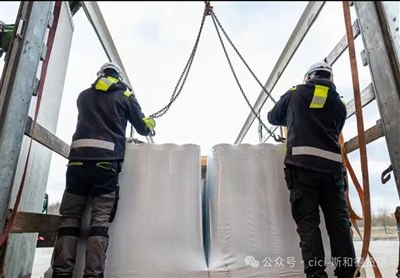
First, let’s get one thing straight: break bulk is way different than containerized shipping. Containers are neat, uniform, and stacked like Legos—you drop a 40-footer at the terminal, they crane it onto a ship, and boom, done. Break bulk is “loose” cargo, no box, no standard size, no easy stacking. That’s why the terminal charges here aren’t just a flat fee for space. They’re a grab bag of services that go way beyond just “parking” your stuff for a few days.
Let’s start with the big ones that hit every break bulk shipment: storage and handling fees. Wait, no—actually, split that into two separate charges, because terminals love that. First is “in-terminal storage,” but not the kind you’re thinking. If your shipment arrives and can’t be loaded onto a ship right away (say, the vessel’s running late, or there’s a delay in customs clearance), the terminal will charge you per day, per ton, or per cubic meter to keep your cargo under their roof. Now, I’ve seen this get ugly last year: we delivered a 30-ton industrial press to the Port of Houston, and the ship got delayed 10 days because of a labor dispute. The terminal hit us with a $1,200 storage fee. For a press that was only supposed to stay 2 days. That’s why you always build a 7-10 day buffer into your shipment timeline—storage delays aren’t just random bad luck, they’re a fact of break bulk life.
Then there’s the handling charge, the one that’s the real money pit. Unlike containers, which you just lift with a gantry crane, break bulk needs specialized gear. We’re talking heavy-lift cranes (the ones that can hoist 100 tons+), forklifts with extra-long masts, flatbed trailers that can haul oversized loads, and even rigging teams that know how to strap a wind turbine blade so it doesn’t bend mid-ship. Terminals charge by the hour for this equipment, and those hourly rates? They’re no joke. A heavy-lift crane at a major port like Rotterdam can run $800 an hour. If your crane time stretches 2 hours (which it will, if your cargo is oddly shaped), that’s $1,600 right there. Add in the rigging team, the flatbed, and any labor to move the cargo from the dock to the yard, and that handling charge can add up to more than the actual shipping cost for small break bulk loads. I once moved a 15-ton generator from Savannah to Kingston, and handling was $2,100—more than the $1,800 ocean freight. Yikes.
Next, there’s customs and documentation fees, but wait—break bulk has its own special twists here. Standard container customs is mostly just scanning and checking the container seal, but break bulk needs physical inspections way more often. Why? Because your cargo is open, not sealed, so customs officers need to make sure nothing’s being stowed illegally, and that the shipment matches the bills of lading. Terminals charge a “cargo inspection access fee” for letting customs onto their yard, and sometimes a “documentation processing fee” to handle all the extra paperwork break bulk requires—like over dimensional certificates, hazardous material forms if your cargo is flammable, and weight declarations for crane load calculations. Last quarter, we moved a shipment of steel rebar that had to be inspected by customs because it was going to a construction site that required material verification. The terminal charged us $450 for that, which included paying a staff member to meet customs at 6 a.m. (because that’s when the terminal was least busy, obviously).
Wait, let’s not forget “yard storage” vs. “stacking fees” (yes, two more). Yard storage is what happens after your cargo is unloaded: if it’s waiting to be picked up by the receiver, the terminal charges per day. Stacking fees are specific to break bulk because you can’t stack just anything. If you’ve got heavy machinery, you might stack it on top of smaller cargo, but only if the terminal’s engineers say it’s safe. Stacking fees are for the labor and equipment to do that, and they vary a ton depending on the cargo’s weight and shape. I moved a shipment of agricultural equipment last year that had two small tractors and one large combine. The terminal stacked the two tractors on top of the combine to save space, and they charged us an extra $300 for that. If we’d had to leave them side-by-side, it would have been $150, so stacking actually saved us money in storage, but the fee for the service was still there.
Now, what about hidden fees that no one tells you about until the bill comes? Oh, man, those are the worst. One big one is “vessel berthing delay charges.” If your terminal’s crane is busy loading other cargo, and they can’t unload your shipment when it’s supposed to arrive, they’ll charge you for the time the vessel is parked at the dock. I’ve had this happen twice: once when we missed our scheduled berth by 2 days, and the terminal hit us with $900. Another hidden one is “oversized cargo permits.” If your shipment is wider than 8 feet or taller than 14 feet (which is pretty standard for break bulk), the terminal has to file permits with the port and local authorities to make sure it can be moved through the port without blocking roads or other cargo. Some terminals bake that into the handling fee, others charge it as a separate $200-$500 fee. Last month, I moved a 20-foot-long pipe that was 12 feet wide, and the terminal charged us $350 for the permit—something I didn’t even know I needed until I got the bill.
Wait, let’s talk about how terminals calculate these charges, because that’s a key point. Most break bulk terminals use a “per ton” or “per unit” rate, but not all. Some use “per cubic meter,” which is a problem if your cargo is heavy but small (like a 5-ton metal mold that’s only 2 cubic meters). That’ll cost way more in per ton rates than per cubic. Others use “weight versus measurement” (W/M) pricing, which means they charge you whichever is higher—weight or volume. That’s why you have to know your cargo’s specs inside and out before you book a terminal, otherwise you’ll get stuck paying extra. I learned that the hard way: a few years back, I booked a shipment of cast iron parts that were 10 tons total, only 3 cubic meters. The terminal used W/M pricing, and I paid $1,200 instead of the $800 I would have paid if they’d charged per ton. Never again—now I double-check the terminal’s pricing model before I lock in a shipment.
Now, as a break bulk supplier, how do we keep these charges from eating into our (and our customers’) profits? It’s not just about haggling (though we do that a lot). First, we plan ahead. I work with my customers to give them accurate cargo specs 2 weeks before shipment, so the terminal can line up the right equipment—no last-minute crane rentals, no rush fees. Second, we negotiate flat rates with specific terminals for regular shipments. Last year, I struck a deal with a terminal in Singapore: for every 5 break bulk shipments we bring in, we get a 10% discount on handling and storage fees. That adds up to thousands a year, which we pass back to our customers in lower total costs. Third, we avoid unnecessary storage delays. We coordinate with the receiver to have their transport ready to pick up cargo as soon as it’s unloaded—no extra days in the terminal yard. That’s a huge one, because storage fees are the easiest to avoid if everyone’s on the same page.
Wait, but what about when things go wrong? Like, when a terminal charges you a fee that you think is unfair. I’ve been there: 2 years ago, a terminal in Los Angeles charged us $1,500 for “snow clearance” (yes, snow in LA, of all places) on a shipment that arrived in February. The snow was light, and they didn’t even move the cargo—they just shoveled the path to the yard. I called their operations manager, showed him that the path was clear, and got the full fee reversed. The key there is to have all your paperwork—bill of lading, cargo specs, communication with the terminal—on hand, and to follow up quickly, not wait 3 weeks after the shipment is done.
Let’s also bust a common myth: break bulk terminal charges aren’t just “terminal greed.” They’re covering all the specialized stuff that container terminals don’t have to deal with. Container terminals can stack 10 containers high, use automated cranes, and handle hundreds of boxes a day. Break bulk terminals have smaller volumes, more specialized labor, and have to comply with way stricter safety rules (because a 100-ton crane malfunction is way worse than a fallen container). So those fees aren’t just for space—they’re for the expertise and equipment that keep your oversized cargo safe through the port.
Now, if you’re reading this and you’re a business owner who needs to ship break bulk cargo, what should you know before you book? First, ask your supplier (that’s me, or any other good break bulk provider) to break down the terminal charges upfront. A lot of suppliers will hide those fees in the total quote, so make them list every single one: storage, handling, permits, inspections, all of it. Second, get a timeline that includes the time cargo will be in the terminal—so you can budget for storage delays if they happen. Third, confirm the pricing model (W/M, per ton, per cubic) so you don’t get hit with a surprise fee.
Here’s the thing: break bulk shipping isn’t the cheapest option, but it’s the only option for oversized or non-containerizable cargo. The terminal charges are a big part of that, but they’re also the part that you can plan for, negotiate, and even avoid with the right prep. As someone who’s been doing this for 15 years, I’ve seen so many customers get burned by unexpected terminal fees because they didn’t ask the right questions. That’s why I’m always upfront about every charge, no hidden costs, no fine print.

If you’re looking to ship break bulk cargo—whether it’s a single piece of equipment, a full project shipment, or something in between—I’m here to break down the costs, answer your questions, and make sure your shipment moves smoothly. Let’s connect to talk through your needs and figure out the best way to keep those terminal charges fair and your cargo on time.
Heavy Equipment Shipping References:
- International Chamber of Shipping. (2022). Break Bulk Shipping Guidelines: Terminal Charges and Best Practices.
- American Association of Port Authorities. (2023). Break Bulk Terminal Operations: Cost Calculations and Industry Standards.
- World Bank Group. (2021). Global Break Bulk Shipping Costs: Terminal Fee Variations by Port.
- National Industrial Transportation League. (2022. Break Bulk Logistics Guide: Managing Terminal Charges for Industrial Shipments).
Speed Supply Chain (Guangzhou) Co., Limited
Speed Supply Chain (Guangzhou) Co., Limited is a licensed NVOCC and first-level freight forwarder in China. With a professional team, we deliver reliable, efficient and cost-effective break bulk service for global customers. If you have any enquiry about quotation, please feel free to email us.
Address: Room 2001-2002, Dongzhao Building, No. 515 Dongfeng Middle Road, Yuexiu District, Guangzhou, Guangdong, China
E-mail: mika.li@speedsucc.com
WebSite: https://www.speedsupplychain.com/
