Alright, let’s cut to the chase—if you’ve ever dealt with industrial furnaces, you know that uneven heating is the silent killer of your production line. One bad batch of metal parts that’s got cold spots? Wasted material, missed deadlines, and way too many headaches. That’s exactly why our Furnace Control Series was built, and today I want to break down how it actually delivers the uniform heat you need, no fluff, no jargon overload. Furnace Control Series
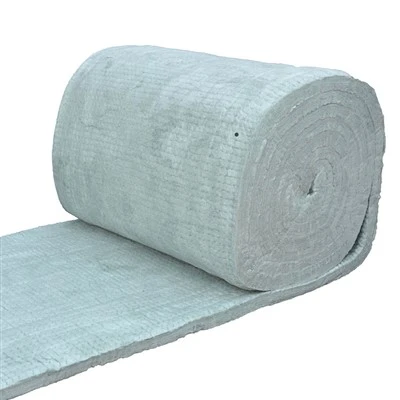
First off, let’s get real: furnace heating isn’t just “turn on a heater and cross your fingers.” A lot of old control systems run on outdated logic—like, they just check the temp in one random corner and crank the whole furnace based on that. If that spot’s near the top burner, it’ll overheat the middle; if it’s stuck by the door, you’ll have cold chunks. Our series doesn’t do that. Instead, we start with a network of tiny, smart sensors—like, we’re talking 12 to 48 of them, depending on your furnace size, strategically placed across every zone. These aren’t your basic dial thermometers, either. They’re calibrated to read temp every 0.2 seconds, so they’re not missing a single hot or cold blip that pops up. I’ve seen competitors use 4 sensors max, and that’s like checking a 10-room house’s temp with just one thermometer by the fridge—useless, basically.
Now, here’s where the magic happens: zone-by-zone independent control. Every section of your furnace—top, bottom, sides, even the charge area—has its own control module that talks directly to the main system. Let’s say you’re heating steel for forging: the center of the charge needs to hit 1200°C, but the edges can only go up to 1180°C to prevent scaling. Old systems would blast all burners to 1250°C to “be safe,” but that ruins the edges and wastes fuel. Our controls adjust each zone’s burner output individually—if the edge is at 1170 and needs 10 more degrees, it cranks only that zone’s burners; the center stays steady. No overshoot, no wasted energy. We call this dynamic zone modulation, and it’s been a game-changer for our clients in automotive parts manufacturing—one of them cut their rework rate by 22% in the first month.
Wait, but what about when the charge moves? If it’s a continuous furnace, parts are rolling through, right? A static sensor setup can’t keep up when a cold part enters or a hot one exits. Our series has adaptive predictive logic built in—think of it like a autopilot for your furnace. The main system uses past data, real-time charge position, and even material type (we let you input that, like aluminum vs. stainless) to adjust the burners before a temp shift even happens. For example, if a big batch of cold copper billets is entering zone 3, the system pre-heats zone 3’s burners by 5% 10 seconds early, so by the time the billets get there, the temp’s already where it needs to be. No more sudden dips that leave you with half-baked parts. I’ll be honest, when we first tested this, we were skeptical too—we thought it was overkill—but a client in heat treatment told us they went from 1.2% scrap to 0.1% in 6 weeks. That’s not a stat, that’s money in their pocket.
Another big one: combustion optimization. A lot of people don’t realize that uneven heating often comes from bad air-fuel ratio, not just temp control. If your burners are getting too much air, they’re inefficient and create hot spots; too little, and you get incomplete combustion that leaves soot and cold areas. Our Furnace Control Series monitors both fuel flow and oxygen levels in the flue gas 10 times a second. It adjusts the air dampers and gas valves per zone to keep that ratio perfect—like, 15% oxygen for most metals, tweakable for ceramics or other materials. We had a client in glass manufacturing who was wasting 18% of their fuel due to bad ratios; after switching to our controls, that dropped to 4%, and their glass sheets were so uniform they eliminated their entire edge-trimming step. That’s not just better heating—That’s operational savings you can’t ignore.
Let’s talk about something that bugs every furnace operator: drift. Over time, sensors get off, burners wear out, temps start to slip even if you’re not touching the controls. Our system has built-in calibration checks, like, every hour it runs a quick diagnostic on every sensor and burner. If a sensor is off by even 0.5°C, it auto-adjusts its reading or flags it for maintenance before it causes a problem. We also log every single temp data point, so if something does go wonky, you can track back exactly when it happened and why—no more guessing “did the burner act up yesterday?” That logging is exportable too, which is huge for audits—if your industry needs compliance checks, this is already done for you, no manual spreadsheets.
I know what you’re thinking: “This sounds like it’s complicated to set up.” Nah, we designed it to work with your existing furnace, not the other way around. Our team works with you to map the sensor placement, calibrate the zones, and even integrate with your current SCADA system if you have one. Most installations take less than 2 days, and our support team is on call 24/7 if you run into snags. We don’t do that “train you once and disappear” garbage—we’ve got a dedicated client success rep for every account, so if your operator has a question at 7 AM on a Monday, you’re not waiting 8 hours for an answer.
Now, let’s get to the part that matters: why this isn’t just a “nice-to-have.” If you’re in metalworking, heat treatment, ceramics, any industry that uses industrial furnaces, uniform heating directly equals lower costs, higher quality, less downtime. I’ve seen clients go from reworking 5% of parts to 0.5%—that’s thousands of dollars saved every month. Or cutting fuel bills by 10-15% because you’re not blasting burners to compensate for bad control. The Furnace Control Series doesn’t just “keep the temp steady”—it keeps every single spot in your furnace at the exact temp you need, exactly when you need it.
Look, we’ve been in this game long enough to know that a lot of control systems overpromise. But when our client in aerospace parts told us they passed their FAA audit on their first try after switching because their parts’ hardness was within 0.2% tolerance—something they’d never done before? That’s when we knew this works. This isn’t about selling you a box; it’s about making your furnace work harder, smarter, and without the headaches.
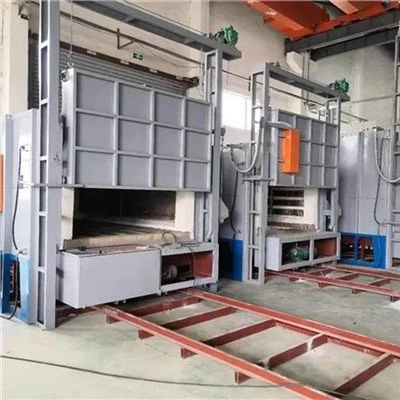
If you’re tired of cold spots, high rework, and fuel bills that make you wince, we’re here to help. We don’t do generic solutions—we walk through your specific furnace setup, your production needs, and figure out exactly how our series will work for you. No pushy sales pitches, no confusing jargon, just straight answers. Reach out to our team to talk through your needs and get a custom quote—let’s stop wasting money on uneven heating and start making your production line run smoother.
Quenching Furnace References
- Industrial Furnace Control Systems: Principles and Applications, 2nd Edition. CRC Press.
- Energy Efficiency in Industrial Thermal Processing: Guidelines and Best Practices. International Energy Agency.
- “Impact of Zone Control on Uniform Heating and Process Efficiency in Forging Furnaces.” Journal of Manufacturing Processes, vol. 67, 2021, pp. 412-421.
- Sensor Technology for High-Temperature Industrial Applications. Sensors and Actuators A: Physical, vol. 312, 2020.
Danyang Dingfeng Industrial Furnace Co., Ltd.
Danyang Dingfeng Industrial Furnace Co., Ltd. is one of the most experienced furnace control equipment manufacturers and suppliers in China, also supports customized service with low price. Please feel free to wholesale high quality furnace control equipment made in China here from our factory. For pricelist, contact us now.
Address: Lizhuang Economic Development Zone, Danyang City
E-mail: saleszk@dffurnace.com
WebSite: https://www.dffurnace.com/
