When you’re shopping for a plastic corrugated pipe machine, it’s easy to fixate on price, production speed, or pipe diameter limits first. But anyone who’s spent years in the piping and extrusion industry will tell you: a machine’s quality certification is the foundation that makes all those other specs actually matter. I’ve sold plastic corrugated pipe machinery for over a decade, and I’ve seen too many buyers cut corners on certification only to end up with equipment that breaks down mid-run, produces non-compliant pipes, or leaves them stuck with expensive repairs and regulatory fines. Today, I want to break down what “quality certification” for this type of machinery actually means—not just the buzzwords on a spec sheet, but the real-world checks that keep your production running, your products legal, and your business profitable. Plastic Corrugated Pipe Machine
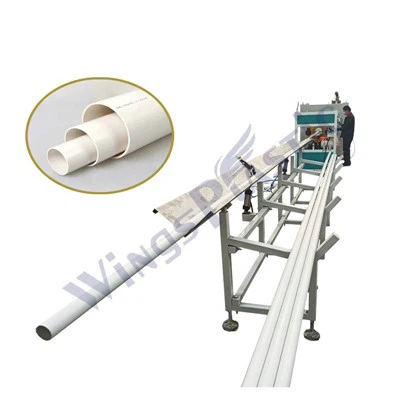
Let’s start with the basics: what even is a plastic corrugated pipe machine? At its core, it’s a complex system that melts plastic resin (usually HDPE, PP, or PVC), extrudes it through a die, forms the corrugated shape in a continuous line, cools it, and cuts it to length. A single machine integrates heating elements, extrusion screws, gearboxes, control panels, and molding dies—all moving parts that have to operate in sync 12 to 16 hours a day, five days a week for many operations. Quality certification isn’t a single stamp; it’s a series of audits and tests across every part of the machine, from its raw materials to its finished output, that prove it’s safe, reliable, and fit for purpose.
The first set of certifications that no machine should ever leave without are global and regional safety standards. This is non-negotiable, even if you only operate in one country. For machinery sold in the European Union, that means CE marking, which confirms compliance with a suite of safety directives, including the Machinery Directive 2006/42/EC. CE marking isn’t just a sticker; it requires a third-party notified body to test that all moving parts (like the extruder screw and cutting blade) have proper guarding to prevent entrapment, electrical components are rated for industrial use to avoid fire hazards, and emergency stop buttons work within 0.2 seconds of activation. I once worked with a small irrigation pipe manufacturer in Texas who bought a cheap uncertified machine from an overseas supplier; six months in, a worker’s sleeve caught in an unguarded screw, leading to a broken arm and OSHA fines that were more than the machine’s original cost. Never skip the safety certifications.
For operations in North America, look for compliance with OSHA (Occupational Safety and Health Administration) standards and, for electrical components, UL (Underwriters Laboratories) certification. Even in regions with less formal regulatory frameworks, basic safety testing shouldn’t be optional. Beyond safety, there are certifications specific to the piping that the machine produces, because a machine’s design directly determines whether your final product meets industry standards.
A plastic corrugated pipe isn’t just a tube—it has to withstand specific loads, resist chemical corrosion, and carry fluids (or protect cables) without leaking. The International Organization for Standardization (ISO) sets global standards for corrugated pipes, with ISO 4427 for HDPE pipes, ISO 12064 for PVC pipes, and ISO 13438 for testing pipe stiffness and impact resistance. A quality-certified machine will produce pipes that consistently meet these standards, which means the machine’s die, cooling system, and haul-off unit are calibrated precisely enough to maintain uniform wall thickness and corrugation spacing across thousands of feet of pipe.
I remember a client who was making drainage pipes for a municipal construction project. They bought a machine that was cheap but uncertified for ISO standards. Within three months of laying the pipe, 12 sections collapsed under heavy road fill—costing the client $200,000 in rework and delaying the project, plus violating municipal specs that required ISO-compliant pipe. The problem? The machine’s extruder pressure fluctuated wildly, leading to thin spots in the pipe walls that didn’t show up in short test runs, but failed under real-world loads. A quality certification for the machine includes testing that proves it can maintain consistent extrusion pressure and output for long production runs, ensuring every foot of pipe meets the required standards.
Another key certification often overlooked is ISO 9001, the standard for a supplier’s quality management system. This is about how the machine is made, not just what it does. If my company is ISO 9001 certified, that means every step of building a corrugated pipe machine is documented: we test each component before assembly, track every machine’s parts and production history, and have a process for fixing issues that arise during manufacturing. A supplier without ISO 9001 might cut corners on material quality—using cheap gears that wear out after a year, or low-grade heating elements that burn out mid-production, leading to unplanned downtime. Last year, I had a buyer from a mining company reach out after their previous machine supplier (who wasn’t ISO 9001) had to replace the gearbox on their corrugated pipe machine three times in 18 months. The new machine we supplied, built under our ISO 9001 framework, had gearboxes made from heat-treated alloy steel, with a 10-year warranty on that component—and hasn’t needed a single repair in two and a half years.
For specialized applications, there are additional certifications that matter. If you’re making corrugated pipes for underground cable protection, you might need compliance with NFPA (National Fire Protection Association) standards for flame resistance, because these pipes often run near power lines. For agricultural irrigation pipes, certifications from the American Society of Agricultural and Biological Engineers (ASABE) ensure the pipe is safe for contact with food and doesn’t leach harmful chemicals into water. If you’re exporting to a market in Asia, Australia, or Africa, local standards might also apply—like the China Compulsory Certification (CCC) for machinery sold in China, or the Australian Standard AS/NZS 4766 for corrugated plastic pipes. A good supplier should walk you through which certifications you need for your specific market and application, not just send you a generic list.
It’s also important to distinguish between “self-declared” certifications and third-party audited ones. Some cheap overseas suppliers will put a CE logo on their machine without actually going through the testing process, or declare their machine is ISO compliant based on their own internal checks. That’s not real certification—those stamps are worthless. A legitimate third-party certification means an independent, reputable organization (like TÜV SÜD, UL, or SGS) has inspected the machine, tested its performance, and issued a formal certificate that’s verifiable. When we supply a machine, we include a full set of third-party certification documents, not just a sheet with logos, so our clients can show them to regulatory bodies or project managers without hesitation.
Beyond these formal certifications, there are practical quality checks that go hand-in-hand with certification, and that’s where the experience of a supplier matters. A well-certified machine will also have features that reduce waste, improve uptime, and make operation easier—all of which contribute to its long-term value. For example, a machine certified for ISO standards will have a precise control system that adjusts temperature and pressure automatically, so you don’t have to stop production to tweak settings every hour. That not only ensures consistent pipe quality but also reduces material waste, which is a huge cost saver for high-volume producers.
I’ve seen buyers get distracted by low upfront costs, only to realize that an uncertified machine costs them more in downtime, rework, and fines over time. Let’s do the math: a certified machine might cost 20% more than an uncertified one, but if it runs 95% of the time (compared to 75% for an uncertified one), and produces pipe that’s 99% compliant (vs. 85% for an uncertified one), the ROI is clear. A customer of ours who makes corrugated pipe for stormwater management calculated that their certified machine paid for itself in 11 months, compared to the two years their competitor took with their cheaper uncertified machine.
So, what should you do next if you’re in the market for a plastic corrugated pipe machine? Start by listing your specific needs: what material will you use? What diameter pipe do you need? What regulations do you have to comply with in your region? Then, when you talk to suppliers, ask for their full certification documents, not just logos on a website. Ask if their certifications are third-party audited, and if they can provide references from other clients in your industry.

At the end of the day, a plastic corrugated pipe machine is a big investment—one that will be running your business for years. Don’t let a lack of proper certification derail your operations, your reputation, or your bottom line. If you’re ready to talk through your needs, get details on certified machines, or learn more about how we ensure every piece of equipment we supply meets the highest quality standards, feel free to reach out. We’re here to help you find a solution that works for your specific application, with all the certifications and support you need to succeed.
PPR Pipe Machine References
ISO 4427:2019, Plastics pipes and fittings — Polyethylene (PE) pipes for water supply
ISO 12064:2019, Plastics pipes and fittings — Unplasticized poly(vinyl chloride) (PVC-U) pressure pipes for non-pressure applications
Machinery Directive 2006/42/EC, Official Journal of the European Union
Underwriters Laboratories (UL) 508A, Industrial Control Panels
National Fire Protection Association (NFPA) 70, National Electrical Code
Qingdao Wings Plastic Technology Co., Ltd.
As one of the most experienced plastic corrugated pipe machine manufacturers and suppliers in China, we also support customized service. Please feel free to buy durable plastic corrugated pipe machine made in China here from our factory. For price consultation, contact us.
Address: C02 Of Anshengyi Road, No.2 Fuan Industry Zone,Jiaodong Town, Jiaozhou City, Qingdao City, Shandong Province,China
E-mail: kelly@wingsplastic.com
WebSite: https://www.wingsextruder.com/
